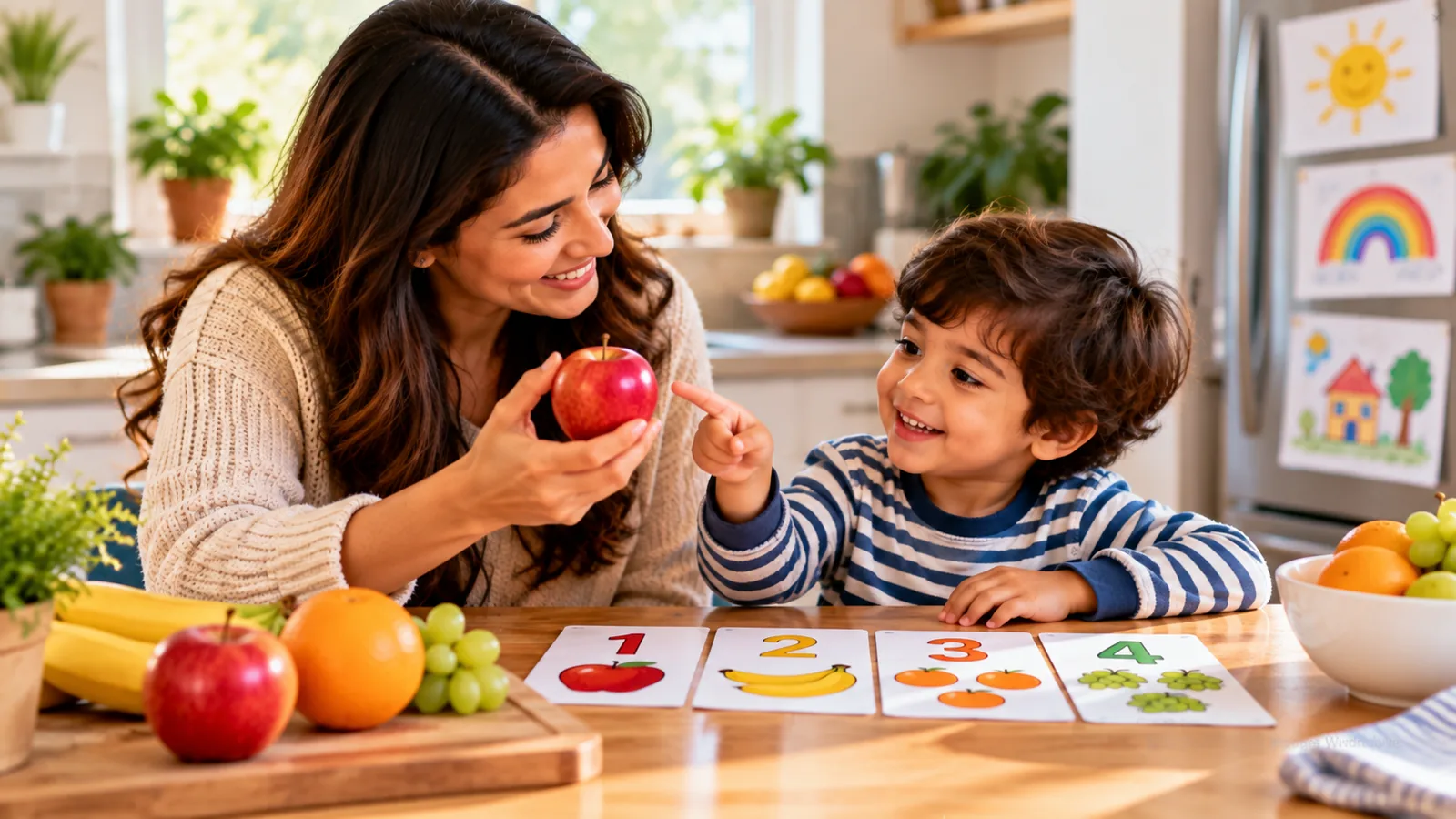
Curiosity begins with noticing
A shadow on the wall, an unusual leaf or a toy that rolls farther than expected can become the beginning of a child's question.
Adults do not need to have an immediate answer to every question. Sometimes wondering together is more valuable than giving a quick explanation.
Turn questions into exploration
- Ask, 'What do you think?' before giving an answer.
- Compare two objects and notice what is different.
- Make a simple prediction before trying something.
- Look closely at safe natural objects such as leaves or stones.
- Use books or trusted resources to explore a question together.
Make room for small experiments
Children can explore ideas with very simple materials. They might discover which objects roll, which items are heavier or what happens when different blocks are stacked.
The purpose is not to create a perfect experiment. It is to give children a chance to observe, predict and talk about what happened.
Try this today
Find two safe household objects and ask your child to predict which one is heavier. Let the child hold both objects, compare them and explain the answer.
It is completely fine to say, 'I don't know. Let's find out.' That response shows children that questions can lead to discovery.
Curiosity grows when children feel that their questions, observations and ideas are worth exploring.
Related Articles
More practical ideas from LiaFun Learning for playful learning at home.
Simple Ways to Make Learning Fun at Home
Practical ideas that help families turn ordinary moments into playful learning opportunities.
How to Build a Simple Learning Routine for Young Children
Create a flexible learning rhythm that fits naturally into family life without making learning feel like pressure.
Helping Preschoolers Learn Without Pressure
Gentle ways to encourage practice, curiosity and confidence while keeping early learning enjoyable.
Keep learning playful
Explore more LiaFun Learning activities designed to make practice simple, visual and enjoyable for young learners.