Bring a little nature into everyday learning
A walk through a yard, park, or neighborhood can lead to wonderful discoveries. Fallen leaves, interesting shapes, and different natural textures can spark questions that continue long after the walk ends.
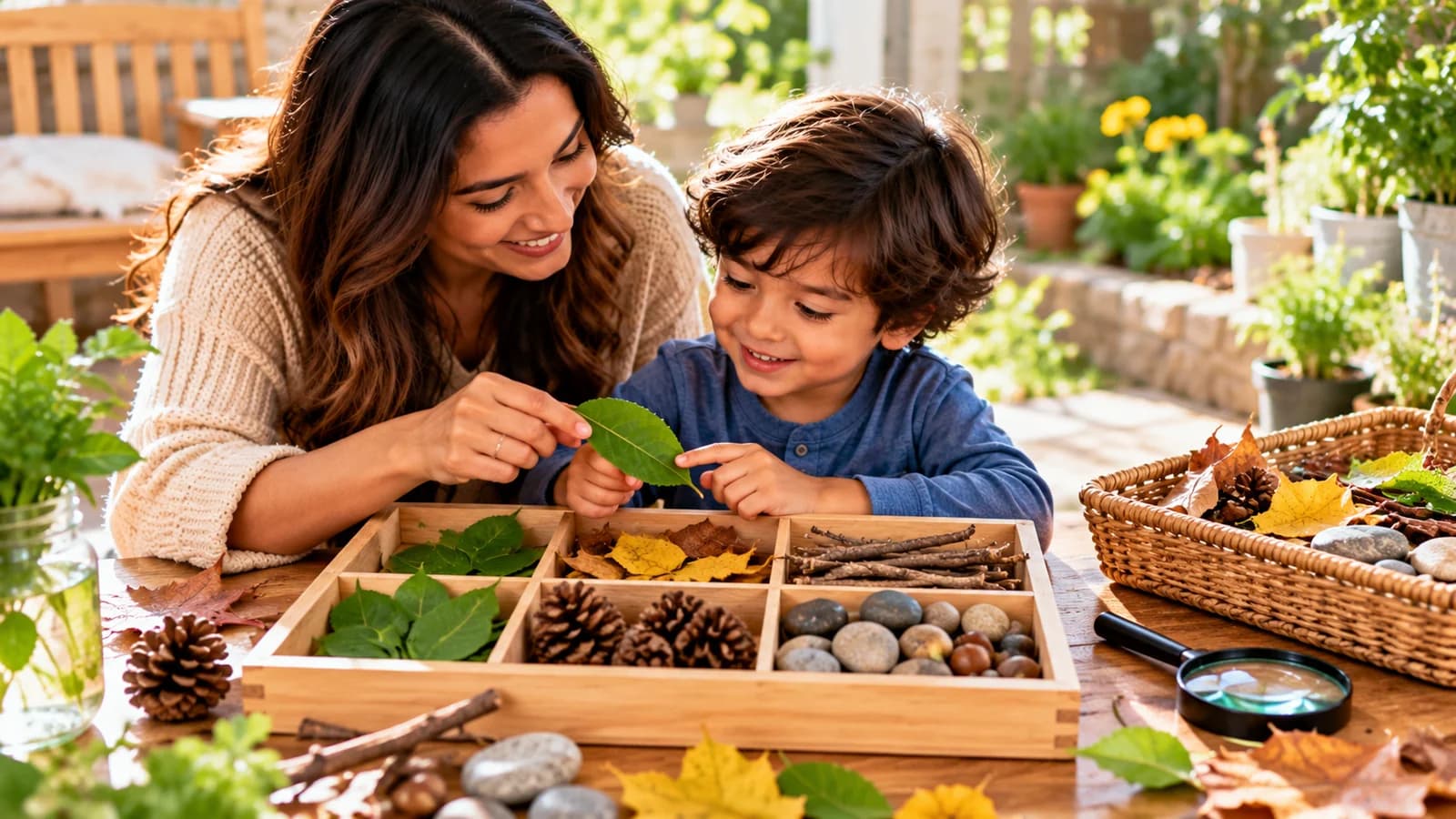
A nature learning box gives young children a place to revisit safe discoveries, compare objects, practice descriptive words, and explore the changing seasons.
You do not need an expensive science kit. A simple container, a few carefully chosen materials, and your child's curiosity are enough to begin.
What you will need
- A clean shoebox or another lightweight container.
- A few large, dry, child-safe natural objects selected by an adult.
- Paper and crayons for drawing discoveries.
- Optional: A magnifying glass designed for children.
- Optional: Printed photographs of outdoor discoveries.
An adult should inspect every item. Avoid unknown plants, mushrooms, berries, sharp objects, animal waste, insects, and small objects that could be swallowed.
Step 1: Take a short discovery walk
Choose a familiar, safe outdoor space and invite your child to look closely at the natural world. You might notice different leaf shapes, tree bark, clouds, or the colors of flowers.
There is no need to collect everything you find. Pointing, talking, drawing, or taking photographs can be just as meaningful.
Follow local park rules and leave living plants, wildlife, nests, and protected natural features undisturbed.
Step 2: Choose safe items for the box
If collecting is permitted, an adult can select a few suitable fallen objects, such as large dry leaves or other clean materials that are safe to handle.
Avoid anything with sharp points, unknown substances, signs of mold, or loose parts. For discoveries that are unsuitable to bring indoors, use photographs or drawings instead.
The box does not need to contain many objects. Three or four carefully selected discoveries can provide plenty to talk about.
Step 3: Create your Nature Discovery Box
- Place the clean, dry materials inside the box.
- Add a simple drawing or photograph of an outdoor discovery.
- Invite your child to describe each item.
- Keep the materials arranged so they are easy to see.
- Store the box in a dry place and inspect its contents before each use.
Wash hands after handling outdoor materials. Discard anything that becomes damp, dirty, damaged, or moldy.
Step 4: Explore colors, shapes, and textures
Open the box together and invite your child to notice what makes each discovery interesting. You might compare the shape of two leaves or look at the patterns in a photograph of tree bark.
Use descriptive words such as smooth, rough, wide, narrow, light, dark, long, and short.
- 'Which leaf looks wider?'
- 'What colors can you see?'
- 'Do these two objects have similar shapes?'
- 'What details can you notice with the magnifying glass?'
- 'Which discovery would you like to draw?'
Step 5: Practice sorting and counting
When the materials are suitable, invite your child to arrange them by a simple feature such as color, shape, or size.
Count the items in each group together. For example, you might count three large leaves and two smaller leaves.
If you are using photographs instead of real objects, children can sort and count those pictures in the same way.
Step 6: Turn discoveries into a story
Choose one favorite item or photograph and ask your child where it was found. What did they notice first? What made it interesting?
You can write down a short sentence your child says, such as 'We found a yellow leaf near the big tree.' Read the sentence together and add a drawing.
This turns an outdoor observation into an opportunity for conversation, vocabulary, and storytelling.
Refresh the box with the seasons
Nature changes throughout the year. In fall, your child may notice colorful leaves. In winter, they might observe bare branches or different weather patterns. Spring and summer can bring new colors, flowers, and sounds.
Update the box with safe materials, photographs, or drawings as the seasons change. Comparing old and new discoveries helps children notice patterns over time.
Try three extra nature activities
- Nature artist: Draw a favorite leaf, tree, or outdoor scene.
- Nature detective: Look at a photograph and describe three details.
- Nature storyteller: Use two discoveries to invent a short story together.
Try this today
Take a short walk and invite your child to notice three interesting things. Choose one safe discovery to draw or photograph, then place the drawing or photograph in a small box.
Spend a few minutes talking about what you observed. Over time, the box can become a personal collection of your child's questions, ideas, and discoveries.
Keep exploration relaxed and child-led. The goal is careful observation and curiosity, not collecting the largest number of objects.
A nature learning box turns everyday outdoor discoveries into opportunities for observation, sorting, counting, vocabulary, and storytelling. With safe materials and thoughtful adult guidance, children can explore nature through simple hands-on learning.
Learn Through Play
Try a Related Learning Activity
Continue exploring this topic with a playful activity from LiaFun Learning.
Related Articles
More practical ideas from LiaFun Learning for playful learning at home.
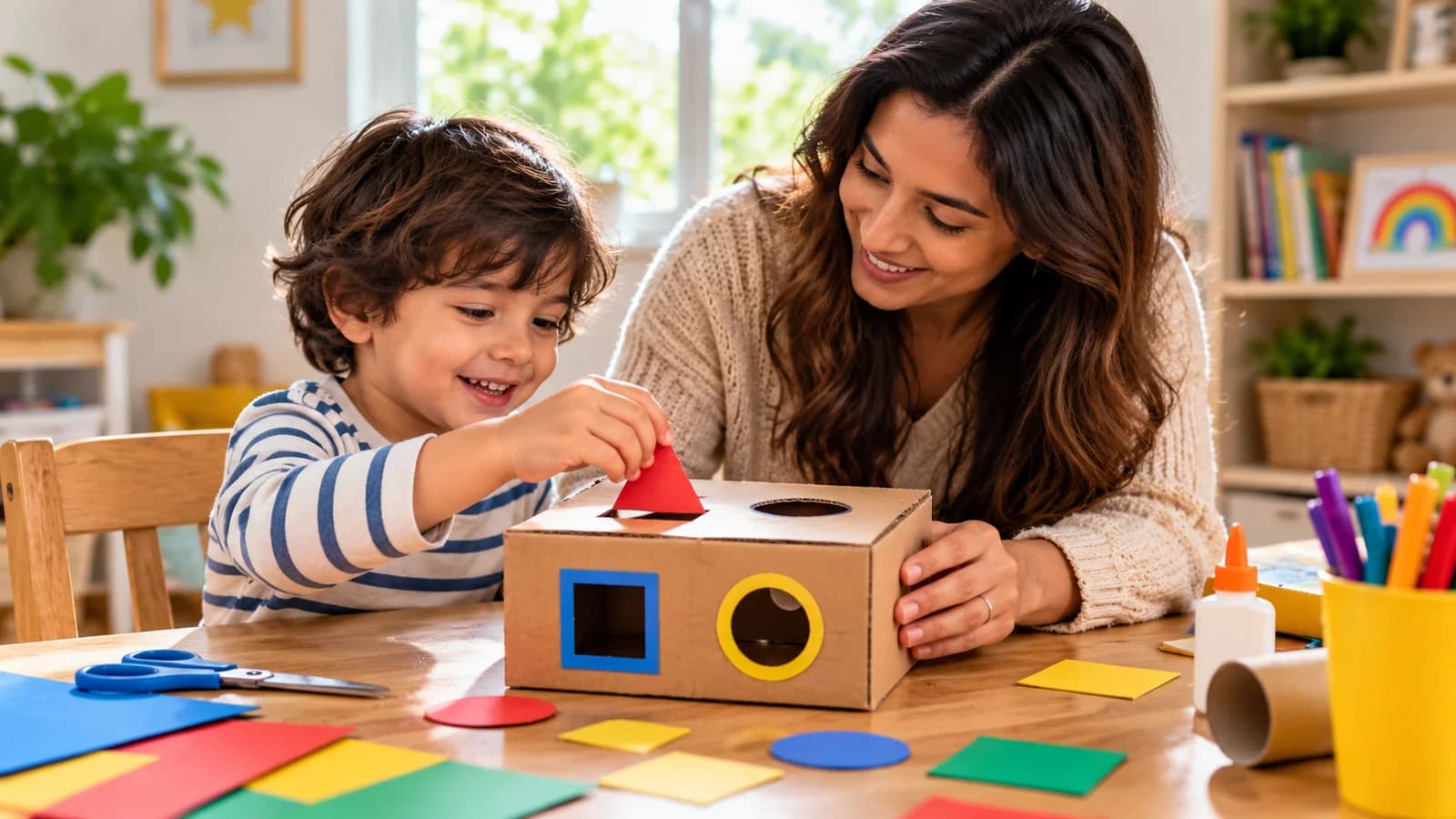
How to Make a Simple Learning Toy at Home
Make a simple DIY learning toy at home with color sorting containers and everyday objects. Practice matching, counting, vocabulary and thinking.
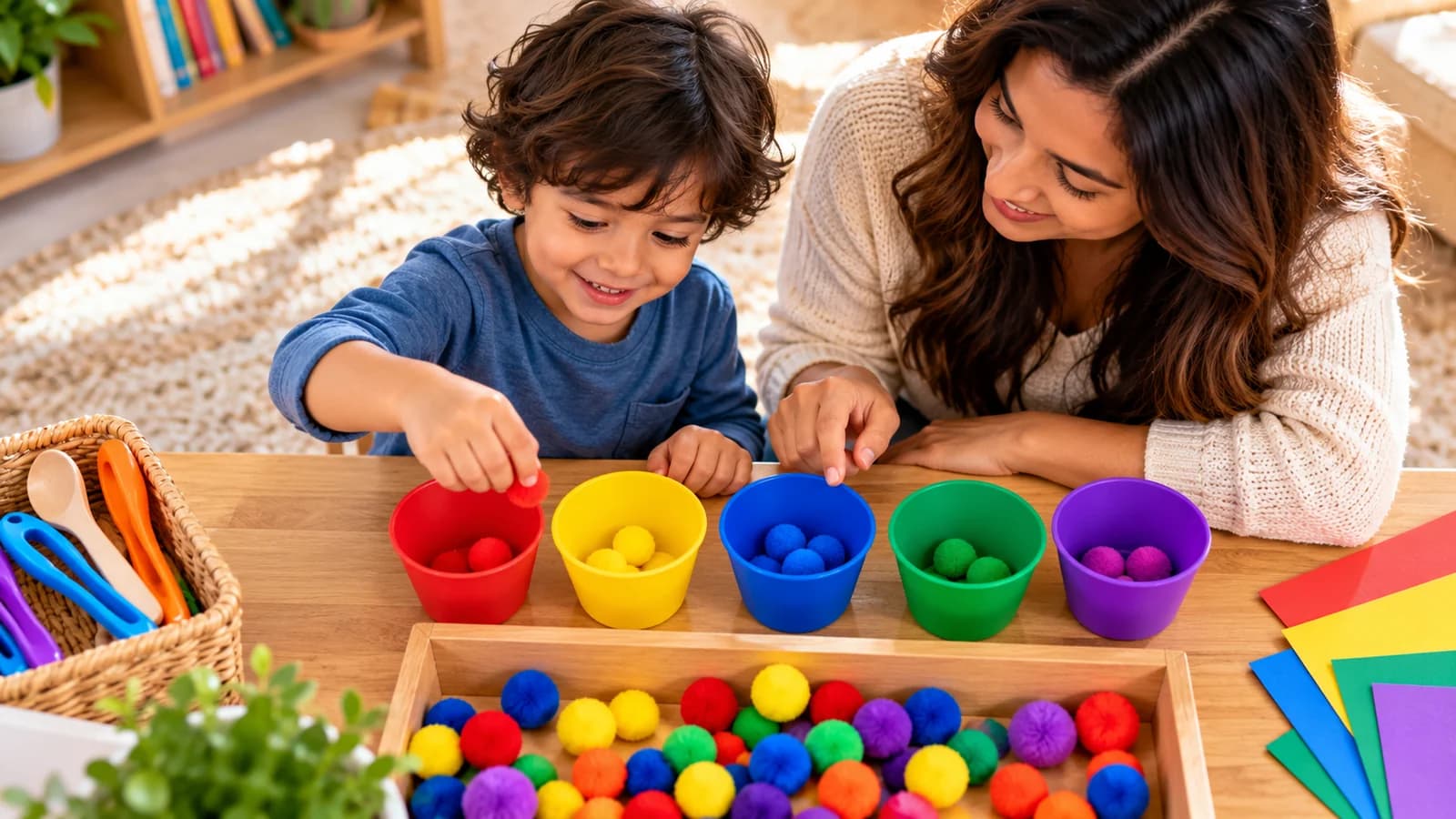
DIY Color Sorting Activity for Preschoolers
Try a simple preschool color sorting game using everyday objects. Follow easy steps to help children recognize colors, match objects and practice counting.
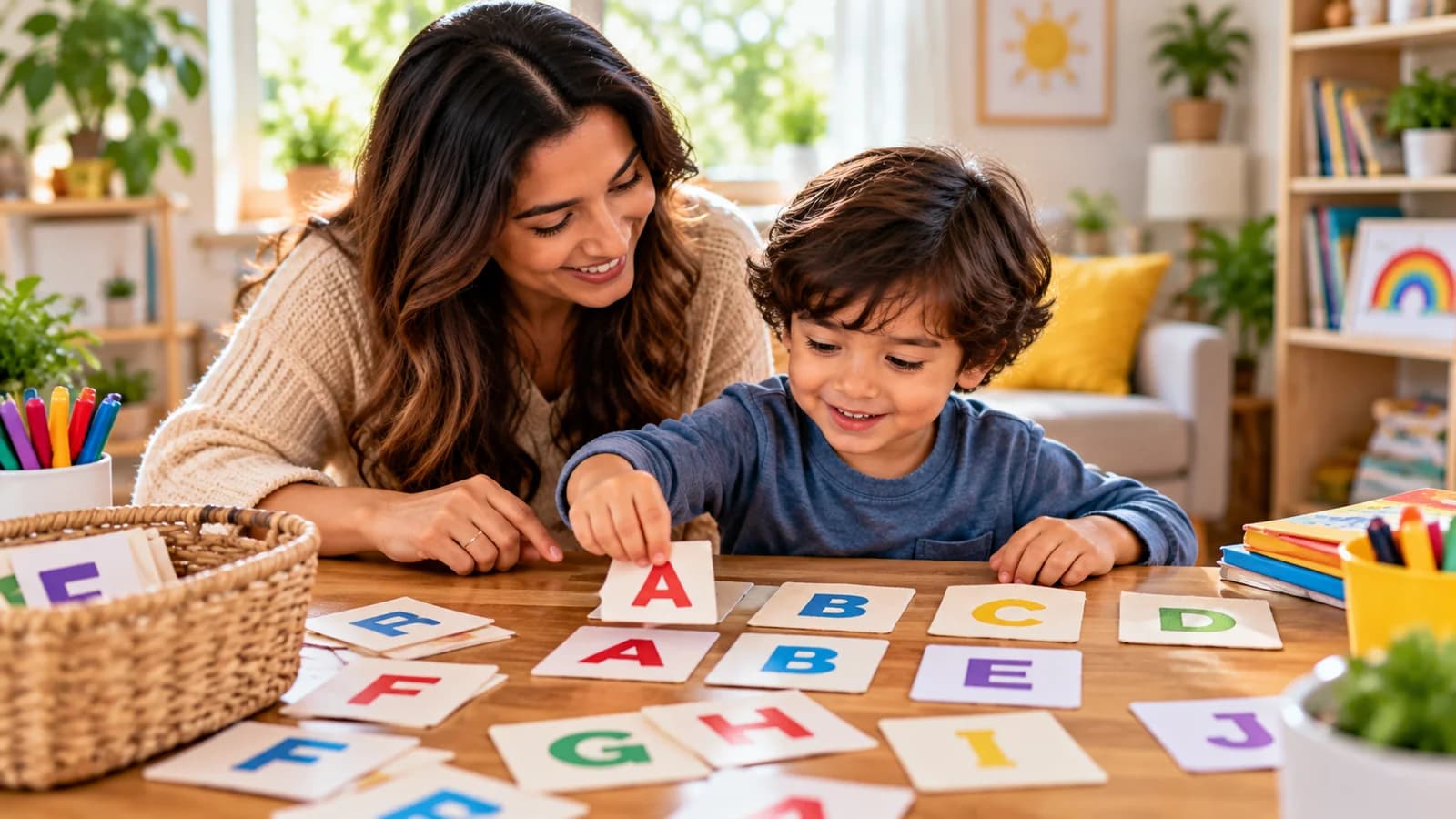
Make a Homemade Letter Matching Game
Make a fun alphabet matching game at home with simple paper cards. Help preschoolers recognize letters, match shapes and explore beginning sounds.
Keep learning playful
Explore more LiaFun Learning activities designed to make practice simple, visual and enjoyable for young learners.