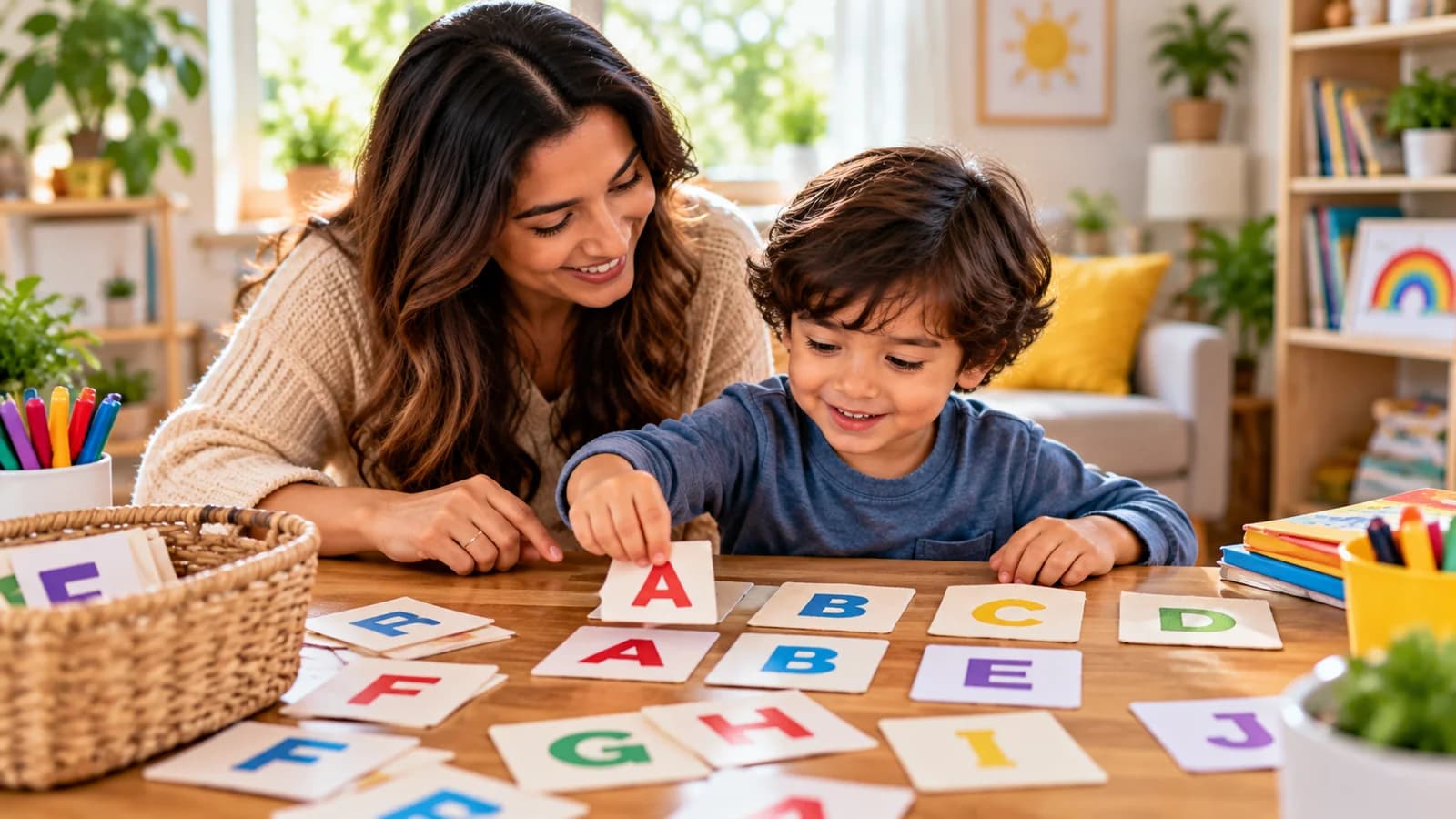
Make learning letters feel like a game
Learning the alphabet does not have to begin with worksheets or memorizing every letter. A simple homemade letter matching game lets young children explore letter shapes, notice differences, and practice recognizing familiar letters through play.
With a few pieces of paper and a marker, you can create reusable matching cards that grow with your child's confidence.
What you will need
- Sturdy paper, cardstock, or clean cardboard.
- A washable marker with a clear, bold tip.
- Child-safe scissors for adult use.
- A small envelope or box to store the cards.
- Optional: Crayons and simple picture drawings.
An adult should prepare and inspect the cards. Make them large enough to handle comfortably, with smooth edges and no small detachable decorations.
Step 1: Create your letter cards
Cut the cardstock into six large, similar-sized cards. Write A, B, and C on three cards, then write the same letters on the remaining three cards.
Use simple, easy-to-read uppercase letters. Keep the background plain so the letter shapes are the main focus.
You do not need to prepare the entire alphabet. Starting with three matching pairs keeps the game approachable.
Step 2: Introduce the letters together
Place one A, one B, and one C card on the table. Point to each letter and say its name slowly.
Invite your child to look at the lines and curves. You might say, 'A has a point at the top,' or 'B has two rounded parts.'
If your child already knows some letters, begin with those familiar shapes before introducing new ones.
Step 3: Play the matching game
- Place three different letter cards face up.
- Give your child one matching card.
- Invite them to look carefully at its shape.
- Ask them to find the same letter on the table.
- Place the matching cards side by side.
- Repeat with the remaining pairs.
If three choices are too difficult, begin with two letters. Demonstrate a match together before inviting your child to try.
Step 4: Connect letters with familiar words
Once your child enjoys matching the letters, introduce a familiar word for each one. For example, A is for apple, B is for ball, and C is for cat.
You can draw a simple apple, ball, or cat on separate cards. Invite your child to connect each picture with its beginning letter.
Keep this as a playful introduction to letter-sound connections. Children do not need to master every letter or sound in one session.
Step 5: Try uppercase and lowercase matching
When matching identical uppercase letters becomes comfortable, prepare another set with lowercase a, b, and c.
Place the uppercase cards on the table and invite your child to find the corresponding lowercase letters.
Some uppercase and lowercase pairs look quite different. Introduce them gradually, and use familiar examples to help your child notice the connection.
Turn the cards into a letter hunt
For a movement-based variation, place a few letter cards in easy-to-find locations around a safe room.
Give your child one matching card and invite them to search for its partner. When they find it, bring both cards together and say the letter name.
You can switch roles and let your child hide a card for you to discover.
Try three more playful variations
- Memory match: Place a few pairs face down and take turns turning over two cards.
- Name letters: Use letters that appear in your child's name and match identical pairs.
- Picture match: Pair familiar picture cards with their beginning letters when your child is ready.
Keep practice short and enjoyable
A few minutes of relaxed matching can be enough for one day. Reuse the same cards so your child becomes familiar with them, and add new letters gradually.
If your child prefers drawing, building, or another activity, you can return to the cards later. The goal is to make letters interesting rather than turning the game into a test.
Celebrate careful looking, participation, and effort. Children can develop familiarity with letters at different rates.
A homemade letter matching game gives children a hands-on way to explore the alphabet. Starting with a few clear cards, familiar words, and playful variations makes early letter recognition approachable and enjoyable.
Learn Through Play
Try a Related Learning Activity
Continue exploring this topic with a playful activity from LiaFun Learning.
Related Articles
More practical ideas from LiaFun Learning for playful learning at home.
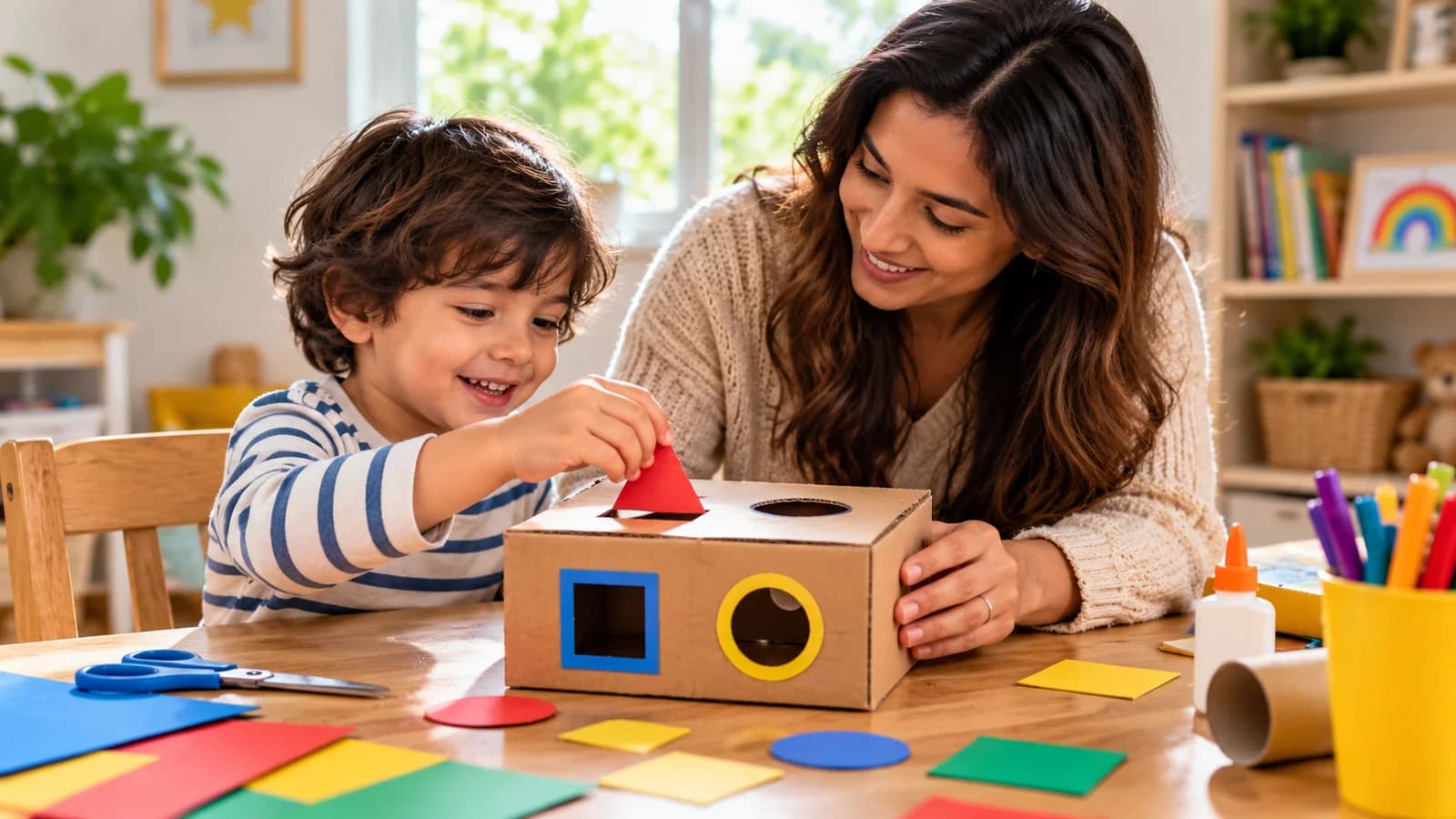
How to Make a Simple Learning Toy at Home
Make a simple DIY learning toy at home with color sorting containers and everyday objects. Practice matching, counting, vocabulary and thinking.
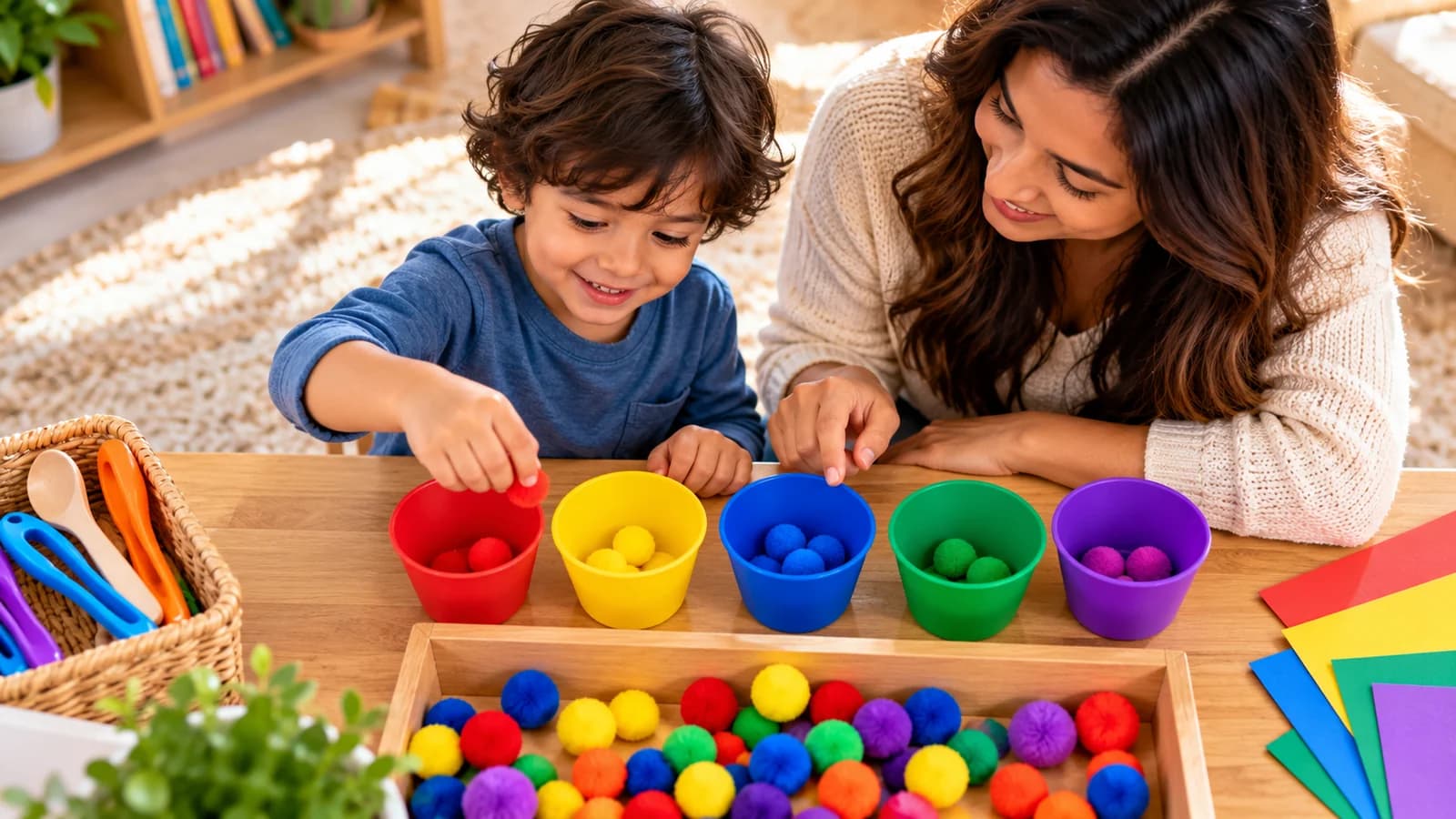
DIY Color Sorting Activity for Preschoolers
Try a simple preschool color sorting game using everyday objects. Follow easy steps to help children recognize colors, match objects and practice counting.
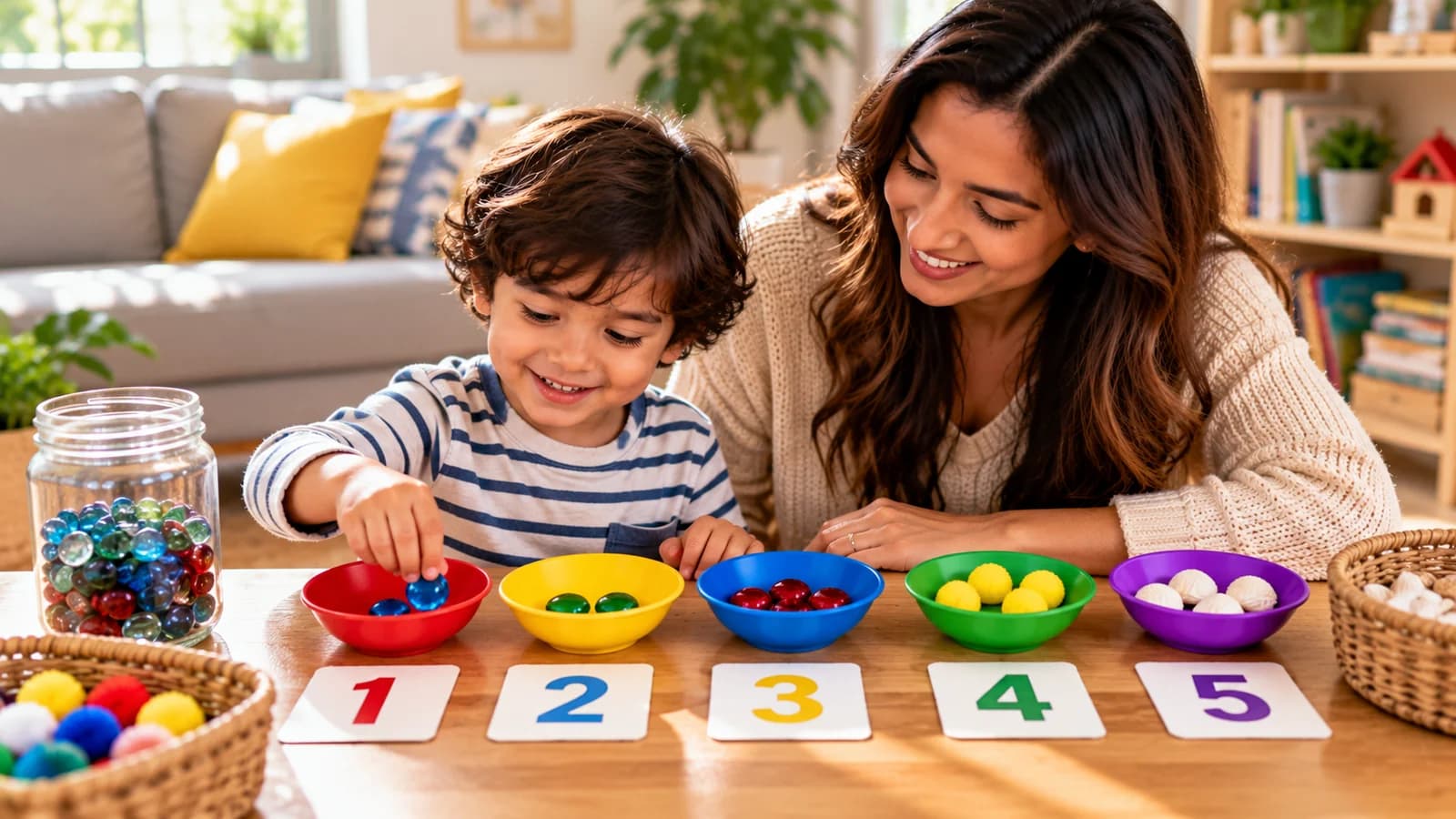
Easy Counting Activities Using Household Items
Discover easy preschool counting activities using everyday household objects. Practice numbers, quantities and early math through hands-on play.
Keep learning playful
Explore more LiaFun Learning activities designed to make practice simple, visual and enjoyable for young learners.