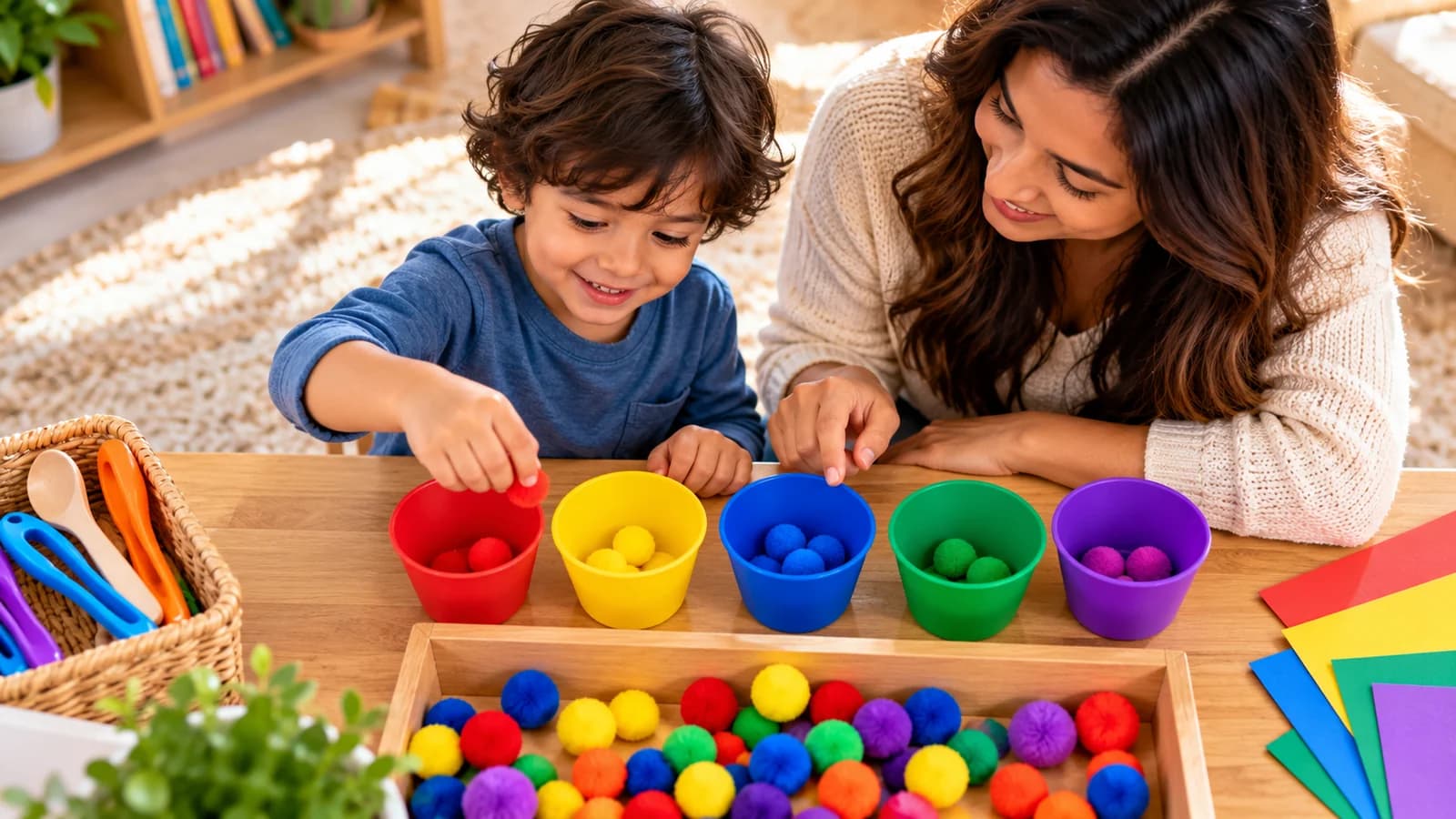
Turn color sorting into a playful discovery game
Learning colors can be more exciting when children get to move, explore, and make their own discoveries. This simple DIY color sorting activity combines a color hunt with a hands-on matching game using everyday household objects.
Instead of sitting at a table for the entire activity, your child can search for familiar colors around the room and bring safe objects to a matching color station.
What you will need
You can prepare this activity in just a few minutes using materials you probably already have at home.
- Three sheets of red, blue, and yellow paper.
- A few large, lightweight, child-safe household objects.
- A clear play area with enough space to move comfortably.
- Optional: Washable crayons for making your own color cards.
Choose objects that are too large to swallow and do not have sharp edges or detachable small parts. Supervise your child throughout the activity.
Step 1: Create three color stations
Place the red, blue, and yellow sheets of paper on the floor, leaving a little space between them. These will become the matching stations.
Point to each color and say its name together. If your child is just beginning to recognize colors, start with only two stations.
Step 2: Start a color hunt
Invite your child to look around the play area for an object that matches one of the color stations.
For example, you might say, 'Can you find something blue?' Your child could choose a large blue block or another safe toy and carry it to the blue paper.
Continue with a few objects, giving your child time to look carefully and make choices.
Step 3: Match and compare
- Choose one safe object from the collection.
- Look closely at its color.
- Find the matching paper station.
- Place the object on or beside the paper.
- Repeat with the remaining objects.
- Look at the completed groups and compare the colors.
If an object has several colors, let your child explain which color they chose to match. There can be more than one reasonable answer.
Step 4: Add movement and listening
Once the basic game becomes familiar, add simple movement instructions. Ask your child to walk to the red station, point to something yellow, or carry a blue object to its matching place.
You can also switch roles and let your child give you instructions. This encourages listening, vocabulary, and communication while keeping the activity playful.
Step 5: Practice counting and comparison
When the color hunt is complete, count the objects at each station. Move or touch one object for every number you say.
Ask questions such as, 'Which color has more objects?' or 'Do we have the same number of red and blue toys?'
Keep the numbers small if your child is new to counting.
Try three creative variations
- Color detective: Give clues such as 'Find something yellow that is soft.'
- Color artist: Draw a simple picture using the colors collected during the game.
- Color switch: Rearrange the color stations and invite your child to match the objects again.
Adapt the activity to your child
For beginners, use two clearly different colors and only a few objects. For children who are comfortable with the game, introduce another color or invite them to describe shades such as light blue and dark blue.
Some children may prefer pointing to objects instead of collecting them. That is fine too. The activity should be flexible enough to match your child's interests and abilities.
Try this today
Choose two or three colors, prepare your stations, and spend a few enjoyable minutes searching for matching objects together.
Finish by asking your child which color was easiest to find or which object they liked best. The conversation is just as valuable as the sorting game.
Keep the activity cooperative rather than competitive. Celebrate careful observation, effort, and participation.
A DIY color hunt turns simple household objects into an engaging learning activity. By searching, matching, moving, and counting, children can explore colors and vocabulary through playful hands-on discovery.
Learn Through Play
Try a Related Learning Activity
Continue exploring this topic with a playful activity from LiaFun Learning.
Related Articles
More practical ideas from LiaFun Learning for playful learning at home.
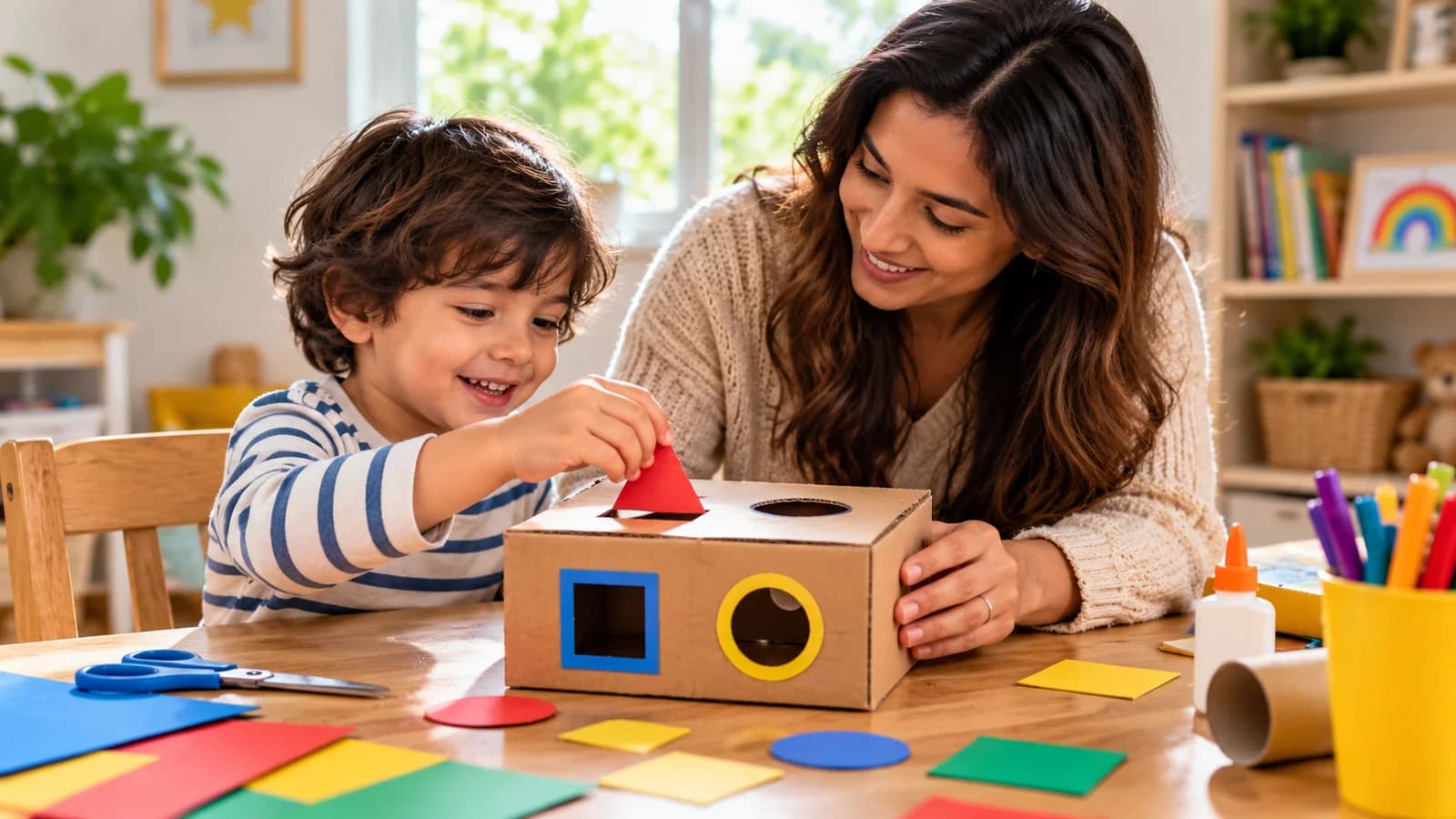
How to Make a Simple Learning Toy at Home
Make a simple DIY learning toy at home with color sorting containers and everyday objects. Practice matching, counting, vocabulary and thinking.
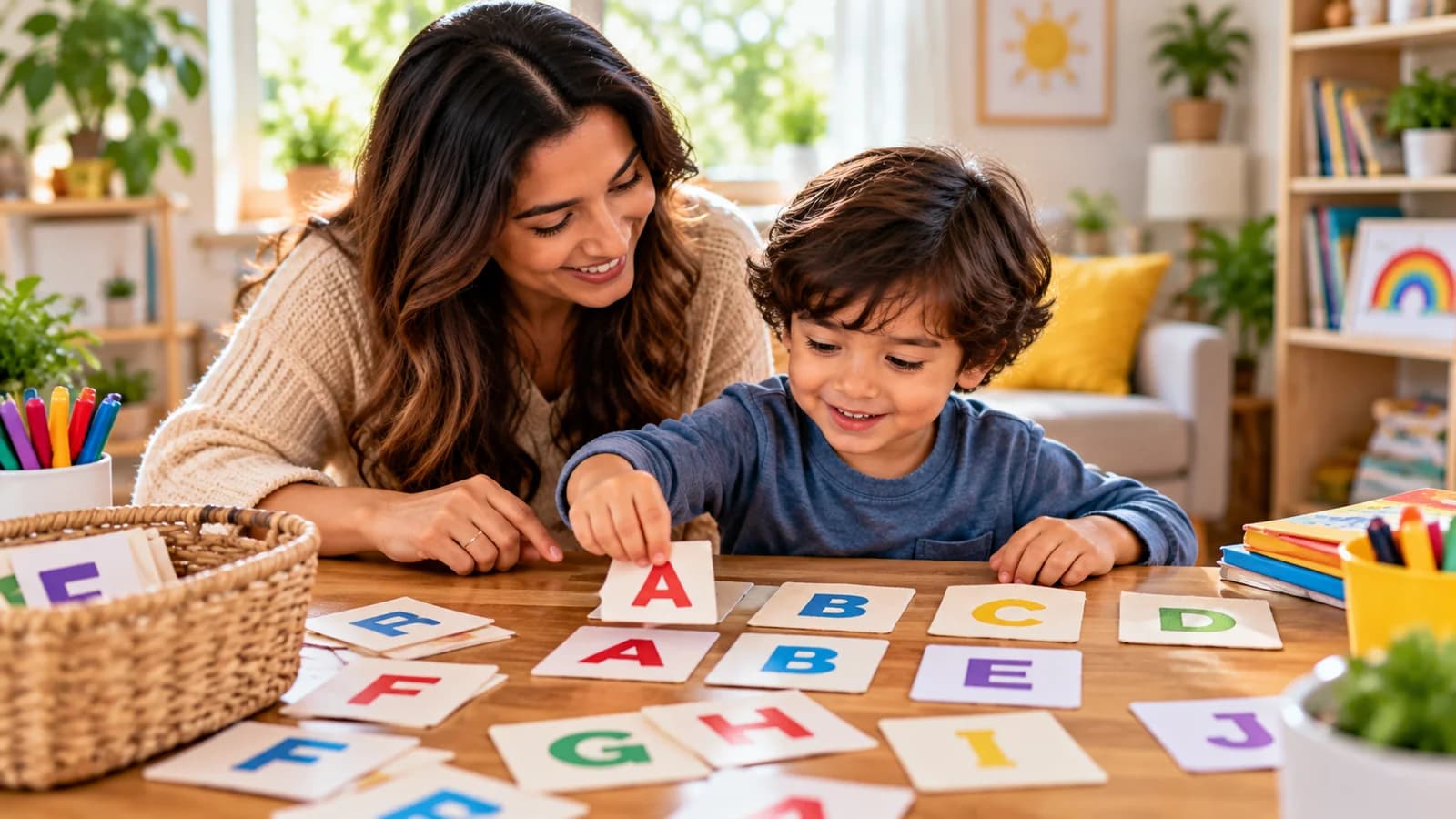
Make a Homemade Letter Matching Game
Make a fun alphabet matching game at home with simple paper cards. Help preschoolers recognize letters, match shapes and explore beginning sounds.
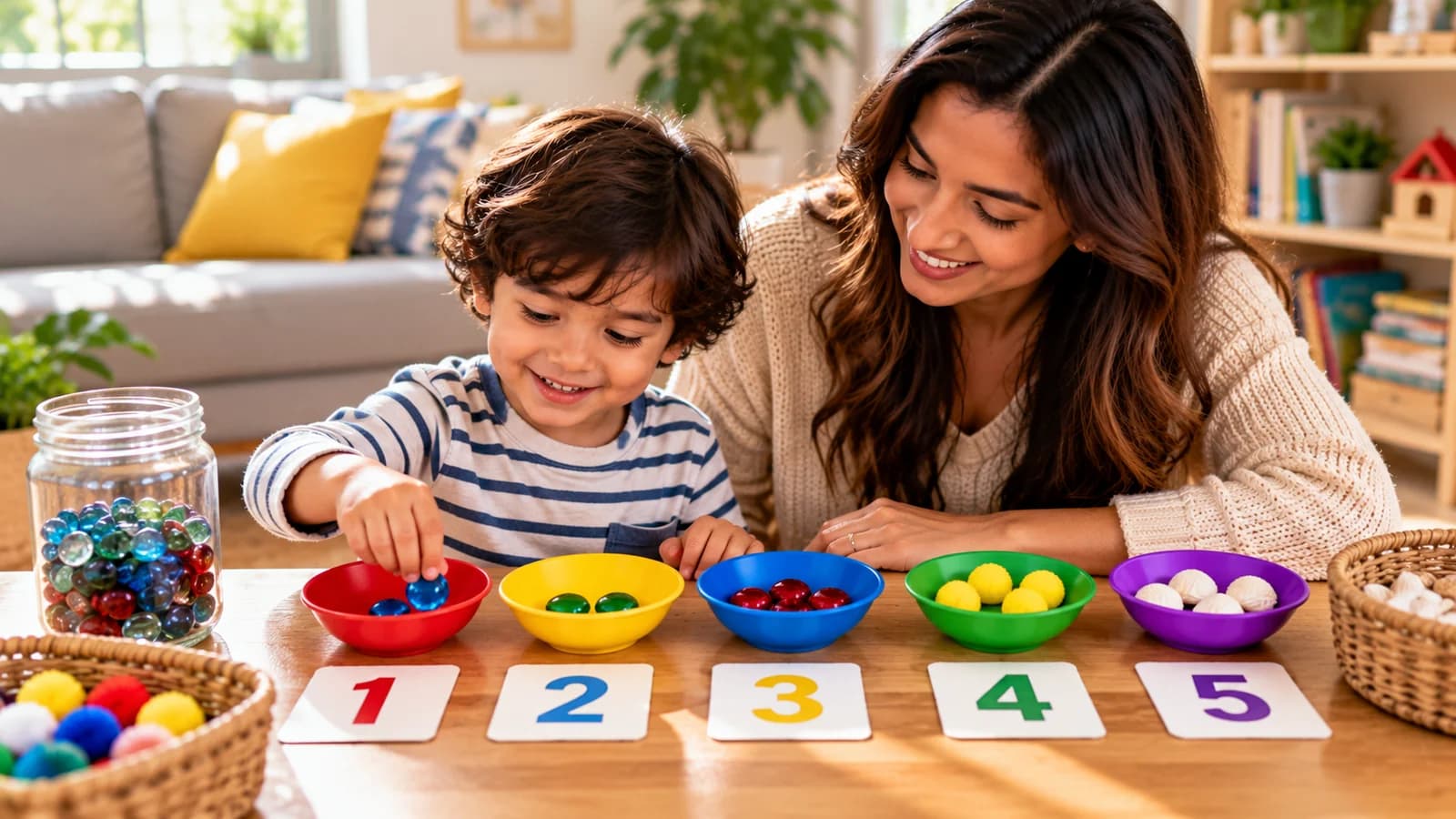
Easy Counting Activities Using Household Items
Discover easy preschool counting activities using everyday household objects. Practice numbers, quantities and early math through hands-on play.
Keep learning playful
Explore more LiaFun Learning activities designed to make practice simple, visual and enjoyable for young learners.