Make counting meaningful with everyday objects
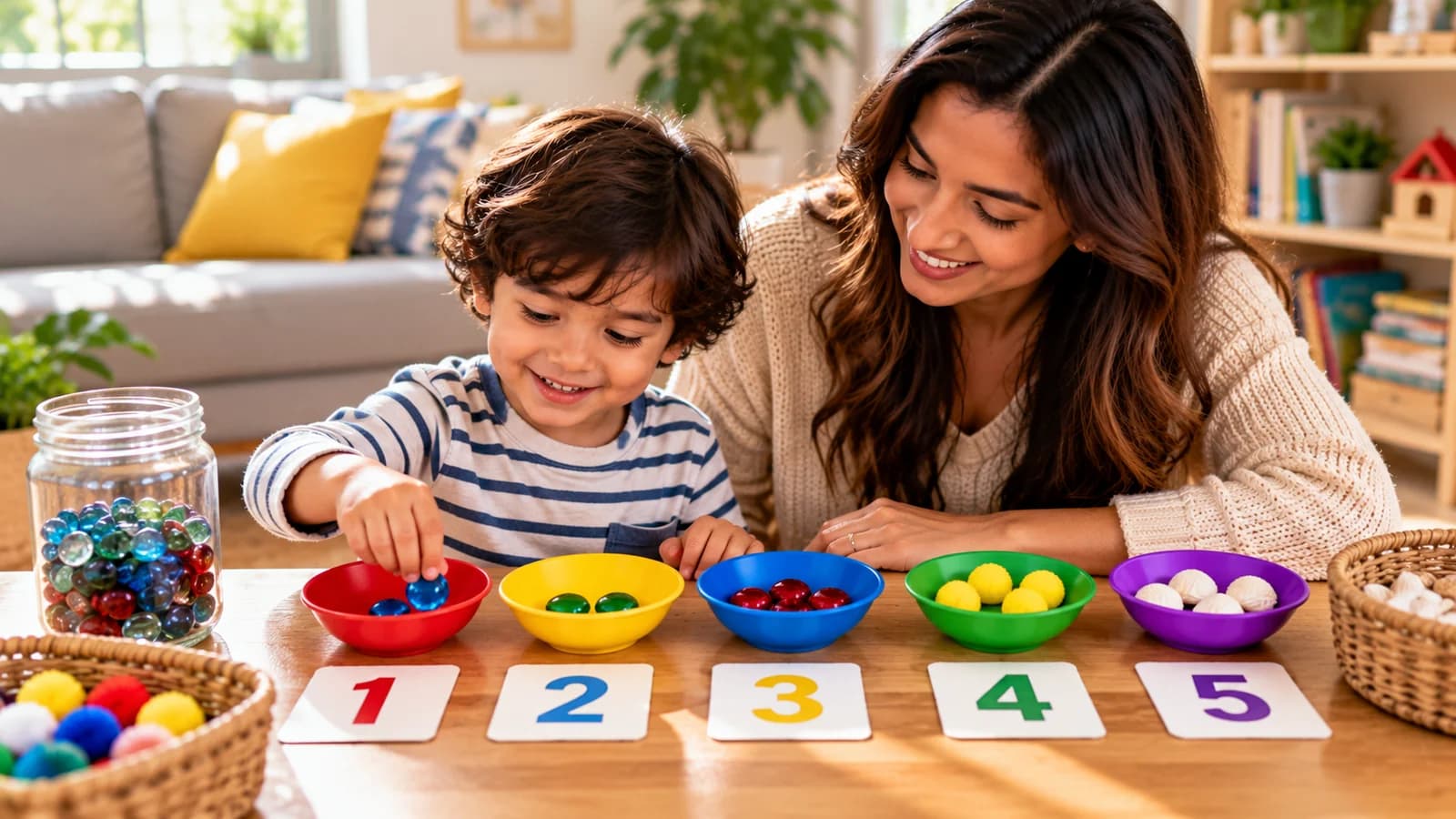
Young children often understand numbers more easily when they can see and touch the things they are counting. Instead of practicing number words alone, use familiar objects to show what each number represents.
A few large blocks, toy animals, or other child-safe household items can become a simple hands-on counting activity. You do not need expensive educational materials or a complicated setup.
What you will need
- Five to ten large, child-safe objects, such as blocks or toy animals.
- A clear table or floor space.
- A small tray or container.
- Optional: Paper cards showing the numbers 1 through 5.
Choose objects appropriate for your child's age. Avoid coins, beads, buttons, and other small items that could be choking hazards.
Step 1: Start with just three objects
Place three large objects in a straight line. Touch the first object and say 'one,' touch the second and say 'two,' and touch the third and say 'three.'
Invite your child to try. Encourage them to touch or move one object for each number word. This is called one-to-one counting.
If your child skips an object or counts one twice, demonstrate slowly and try again together without making the activity feel like a test.
Step 2: Connect counting with quantity
After counting three objects, ask, 'How many blocks are there altogether?' Count again if needed, then say, 'There are three blocks.'
This helps children begin connecting the last number they say with the total number of objects in the group.
Keep the first groups small. When your child becomes comfortable, gradually introduce four or five objects.
Step 3: Match numbers with objects
Write the numbers 1, 2, and 3 on large paper cards. Place the cards on the table and help your child make a matching group of objects for each number.
- Place one block beside the number 1.
- Place two blocks beside the number 2.
- Place three blocks beside the number 3.
- Count each group together.
- Mix the cards and try matching them again.
Recognizing written numerals and counting objects are different skills. Introduce number cards gradually, without expecting immediate mastery.
Step 4: Explore more, fewer, and the same
Create two small groups of objects. For example, place two blocks in one group and four blocks in another.
Ask, 'Which group has more?' and 'Which group has fewer?' Let your child compare the groups by looking, counting, or matching objects side by side.
You can also create two groups with the same number of objects and ask what your child notices.
Step 5: Try a simple counting delivery game
Turn counting into pretend play. Place a few large toy animals on the table and ask your child to deliver one block to each animal.
Count the blocks as they are delivered. Then try giving two objects to a pretend shopkeeper or placing three large blocks into a toy basket.
Keep the requests small and playful so your child can focus on matching quantities.
Practice counting during daily routines
- Count plates while setting the table.
- Count steps while walking to another room.
- Count large toys while putting them away.
- Count pieces of fruit on a plate.
- Count picture-book animals on a page.
Adjust the activity to your child's level
For beginners, start with one, two, and three objects. If your child is comfortable counting small groups, gradually increase the number.
Some children enjoy counting aloud, while others prefer moving objects or pointing. Encourage participation in whichever way feels comfortable.
Avoid rushing to larger numbers before your child understands smaller quantities.
Try this today
Choose five large, familiar objects. Begin with a group of three and count them slowly together. Then create another small group and compare the quantities.
Finish with a playful challenge, such as asking your child to give you two blocks or place four toys in a basket.
Keep counting sessions short and enjoyable. Repeating a familiar game can be more helpful than introducing several new challenges at once.
Everyday objects make early counting visible and meaningful. By touching one object for each number, matching quantities, and comparing small groups, children can build number understanding through playful daily experiences.
Learn Through Play
Try a Related Learning Activity
Continue exploring this topic with a playful activity from LiaFun Learning.
Related Articles
More practical ideas from LiaFun Learning for playful learning at home.
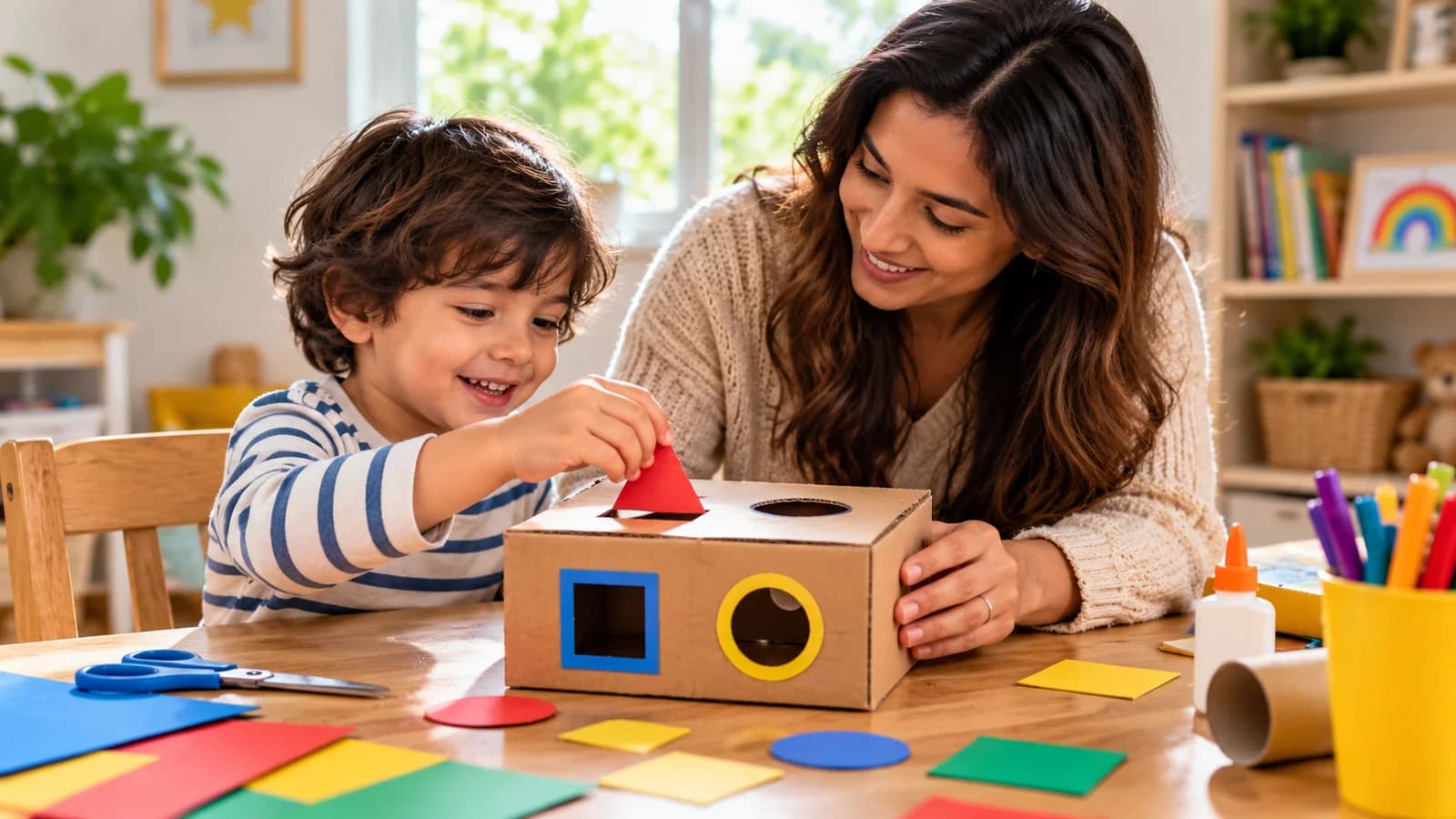
How to Make a Simple Learning Toy at Home
Make a simple DIY learning toy at home with color sorting containers and everyday objects. Practice matching, counting, vocabulary and thinking.
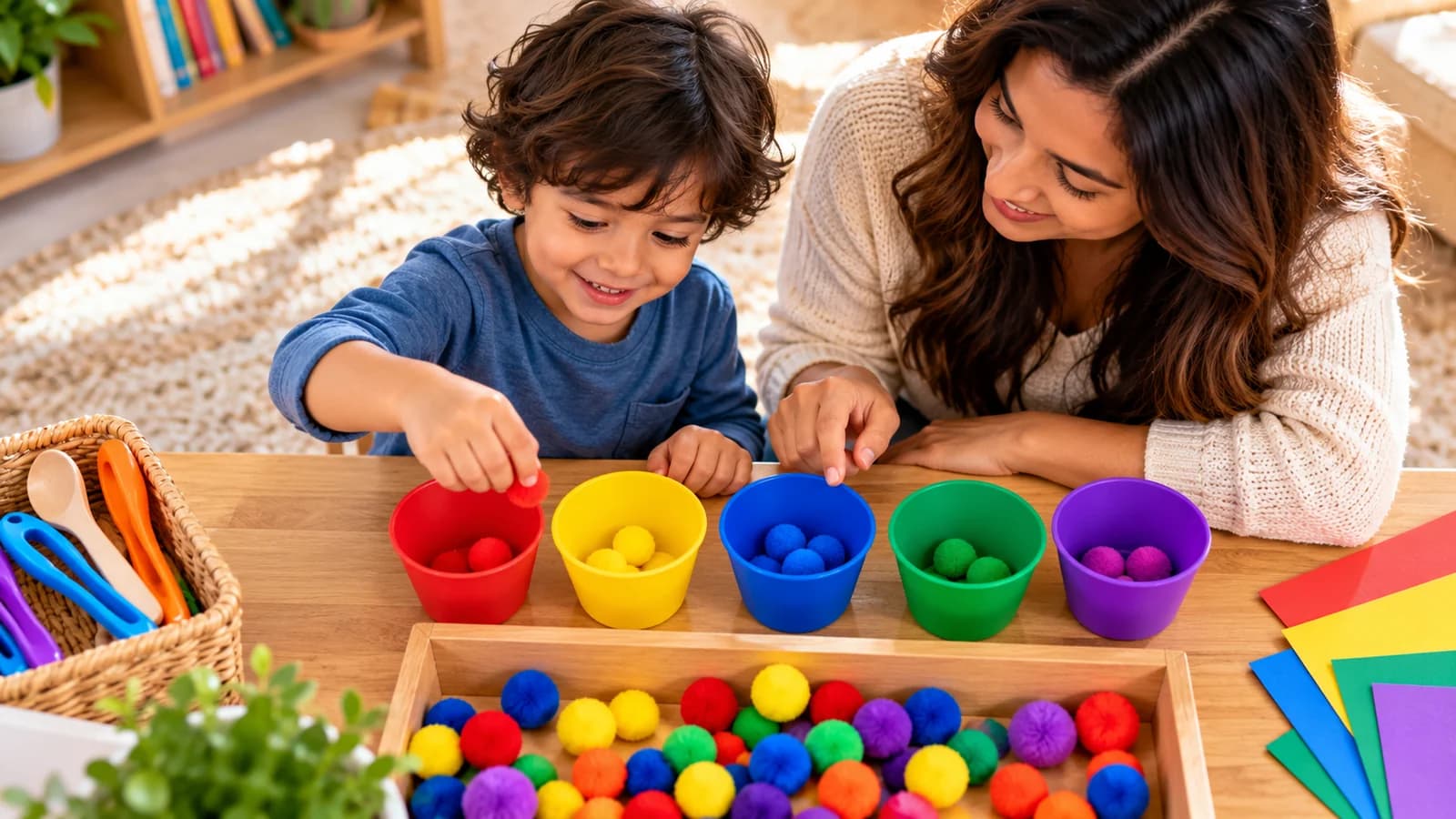
DIY Color Sorting Activity for Preschoolers
Try a simple preschool color sorting game using everyday objects. Follow easy steps to help children recognize colors, match objects and practice counting.
Make a Homemade Letter Matching Game
Make a fun alphabet matching game at home with simple paper cards. Help preschoolers recognize letters, match shapes and explore beginning sounds.
Keep learning playful
Explore more LiaFun Learning activities designed to make practice simple, visual and enjoyable for young learners.