
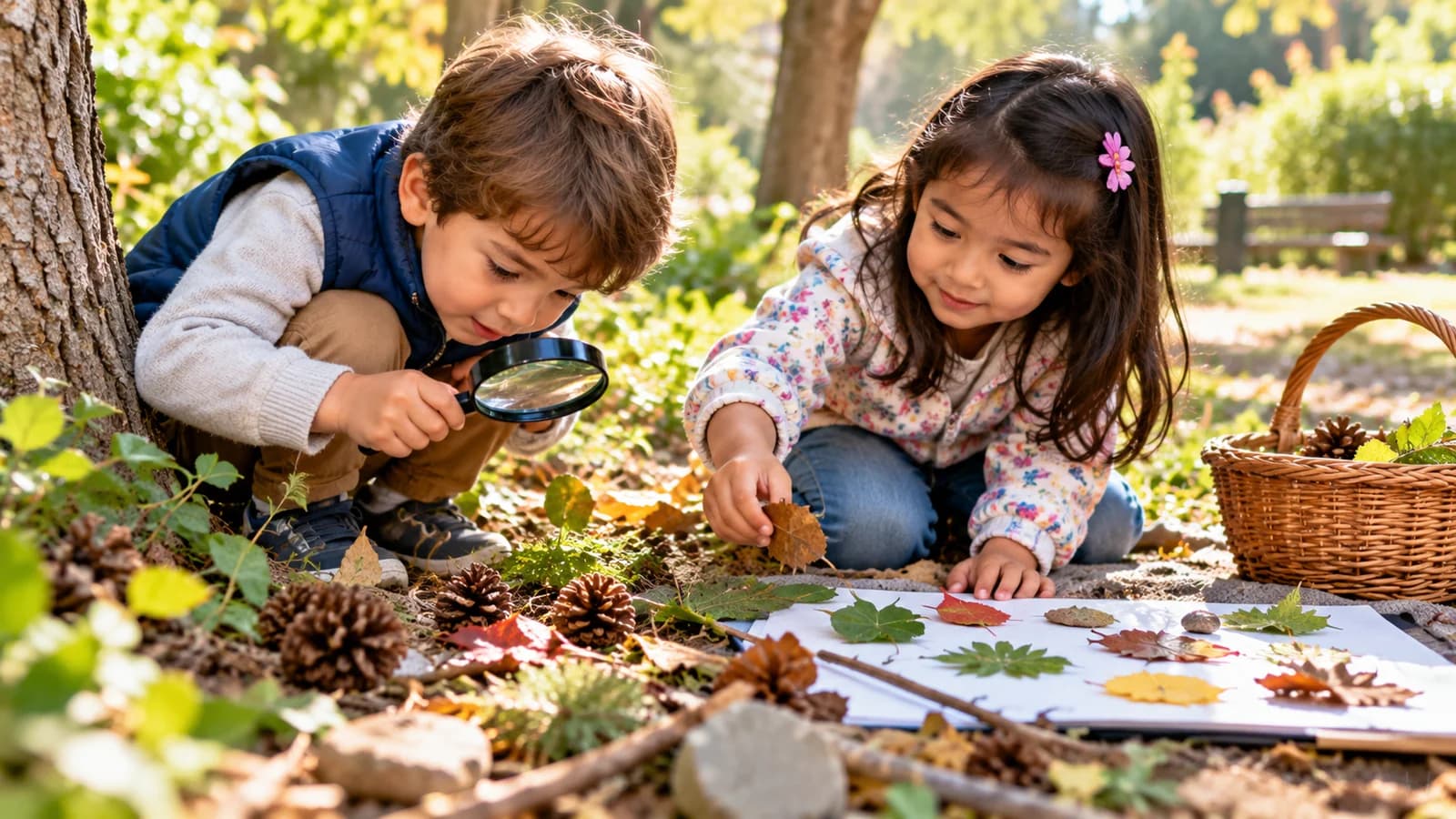
Turn an ordinary walk into a nature adventure
A walk through a neighborhood, a visit to the park, or a few minutes in the backyard can become a discovery game. A nature scavenger hunt encourages children to slow down, look closely, and notice things they might otherwise miss.
Children do not need to collect objects. They can point, describe, draw, or photograph what they discover.
What you need for a nature scavenger hunt
- A safe backyard, park, or walking path.
- A short nature discovery checklist.
- Paper and crayons for optional drawings.
- Comfortable shoes and weather-appropriate clothing.
- An adult to supervise the activity.
Check the weather and choose a safe, familiar location away from traffic and other hazards.
Step 1: Make a five-item nature checklist
Choose five things your child might realistically notice outdoors. Draw simple pictures beside the words so children who are not reading yet can participate.
- Something green.
- A leaf with an interesting shape.
- A bird you can watch from a distance.
- Something that makes a natural sound.
- A shadow made by a tree.
Adjust the checklist to your location and season. Finding three items can be just as enjoyable as finding all five.
Step 2: Look for different colors
Invite your child to find something green. They may notice grass, leaves, or plants in several shades.
Ask whether all the greens look the same. Introduce words such as light, dark, bright, and pale while talking about what you see.
Step 3: Become a shape detective
Look for long leaves, rounded shapes, branching trees, or interesting clouds. Ask your child what each shape reminds them of.
Natural objects rarely look like perfect geometric shapes. Encourage observation and imaginative comparisons rather than expecting one correct answer.
Step 4: Stop and listen
Find a comfortable place to pause and listen for a moment. Your child might hear birds, wind moving through leaves, or footsteps on a path.
Ask, 'What did you hear?' and 'Was that sound loud or soft?' Take turns describing the sounds around you.
Step 5: Play a near-and-far game
Choose one natural object nearby and another farther away. For example, notice a leaf near the path and a tall tree across the park.
Talk about which object is near and which is far. Compare their colors, shapes, or sizes.
Step 6: Ask curious questions
A nature hunt becomes more interesting when children have time to wonder about what they see. You do not need to know every answer.
- 'Why do you think these leaves look different?'
- 'Where might that bird be going?'
- 'What do you notice about the clouds?'
- 'What might change here in another season?'
Step 7: Draw a favorite discovery
After the walk, invite your child to draw something they enjoyed discovering. It might be a tree, a bird, a colorful leaf, or an interesting cloud.
Ask your child to tell you about the picture. You can write down their words and read the sentence together.
Adapt the hunt for different learners
For younger children, use two or three picture clues and let them point to discoveries.
For children ready for more challenge, ask them to compare two leaf shapes, describe several natural sounds, or explain what might change with the weather.
The checklist is a guide, not a test. Follow your child's interests and take breaks whenever needed.
Keep outdoor exploration safe
- Supervise children throughout the activity.
- Observe wildlife without disturbing animals or nests.
- Avoid touching unknown plants, mushrooms, berries, or insects.
- Stay on permitted paths and follow local park rules.
- Wash hands after outdoor play.
Try this nature hunt today
Choose a safe outdoor space and invite your child to find three things: something green, something with an interesting shape, and something that makes a sound.
Spend a few minutes discussing each discovery. When you return home, ask which part of the walk your child remembers best.
The goal is not to complete every item. It is to enjoy noticing, wondering, and exploring together.
A simple nature scavenger hunt turns an ordinary walk into an opportunity for observation, conversation, movement, and early science learning. With a short checklist and safe adult supervision, children can explore the outdoors through playful discovery.
Learn Through Play
Try a Related Learning Activity
Continue exploring this topic with a playful activity from LiaFun Learning.
Related Articles
More practical ideas from LiaFun Learning for playful learning at home.
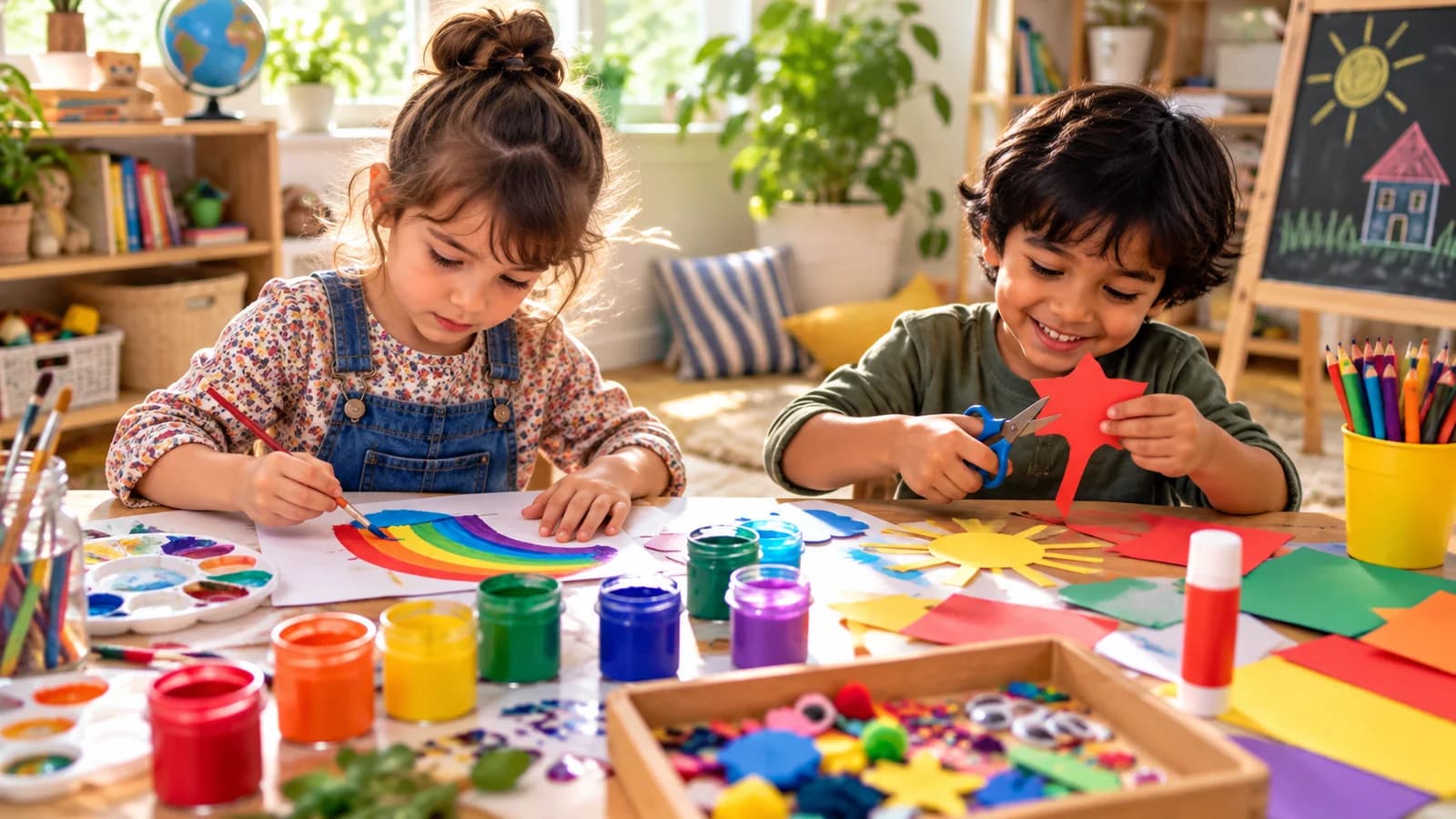
5 Creative Activities for Preschoolers at Home
Explore 5 creative activities for preschoolers, including drawing stories, building a mini city, pretend shopping, colorful patterns and imaginary animals.
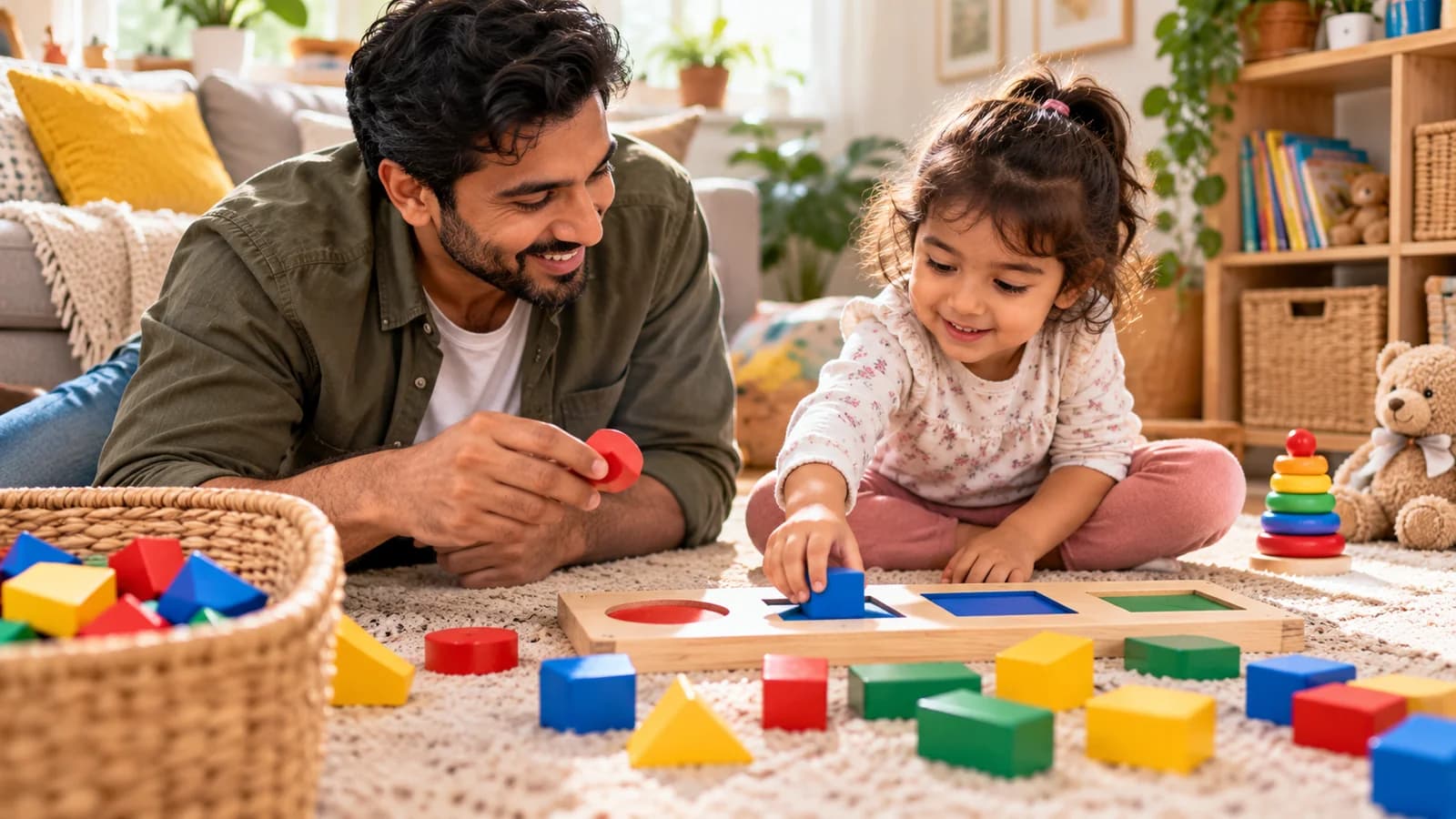
5 Fun Indoor Learning Games for Preschoolers
Discover 5 fun indoor learning games for preschoolers, including color hunts, guessing games, movement patterns, listening activities and shape searches.
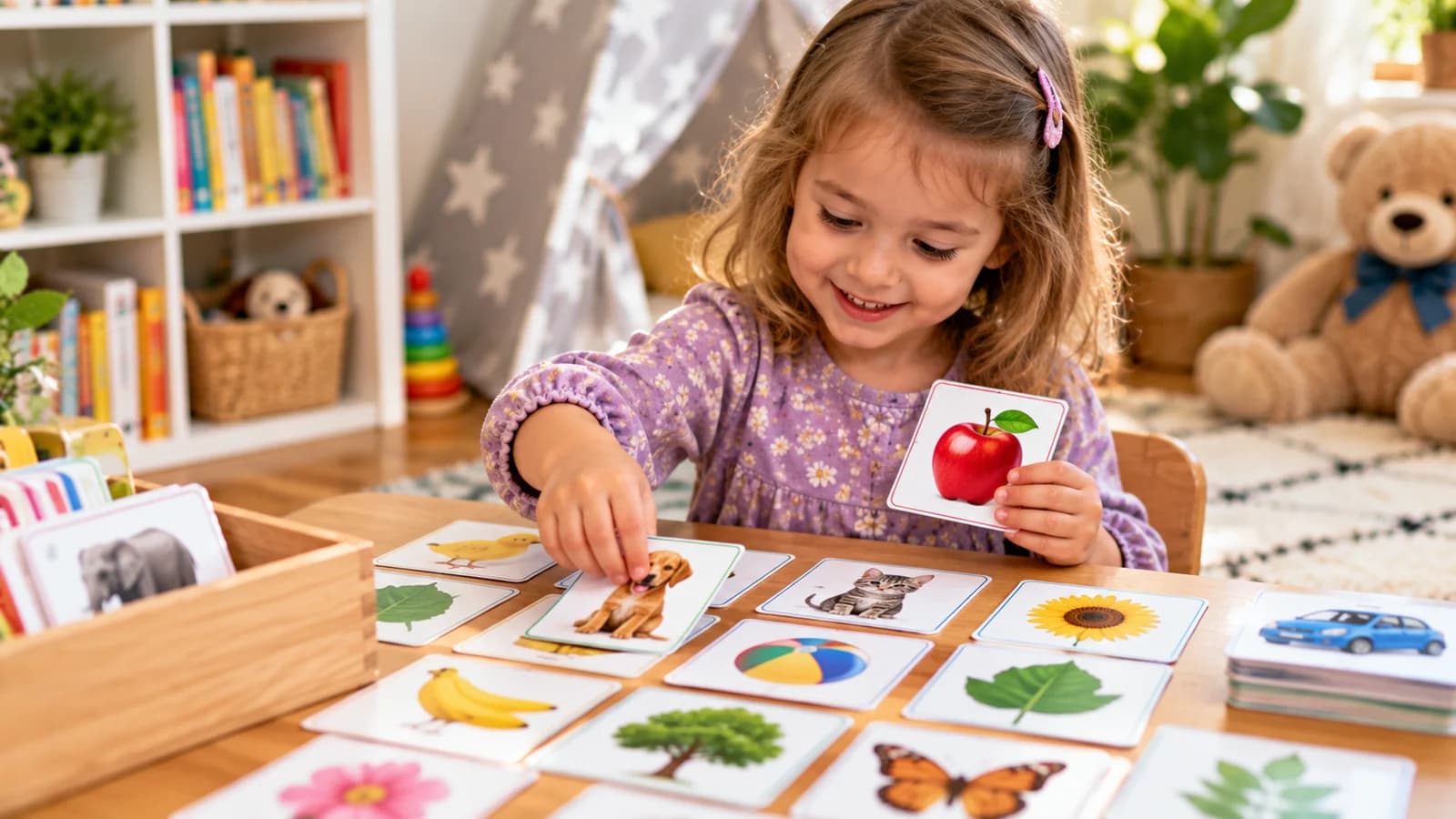
Picture Vocabulary Games for Young Children
Explore simple picture vocabulary games that encourage young children to name, describe, sort, and talk about everyday objects.
Keep learning playful
Explore more LiaFun Learning activities designed to make practice simple, visual and enjoyable for young learners.