Turn everyday pictures into vocabulary games
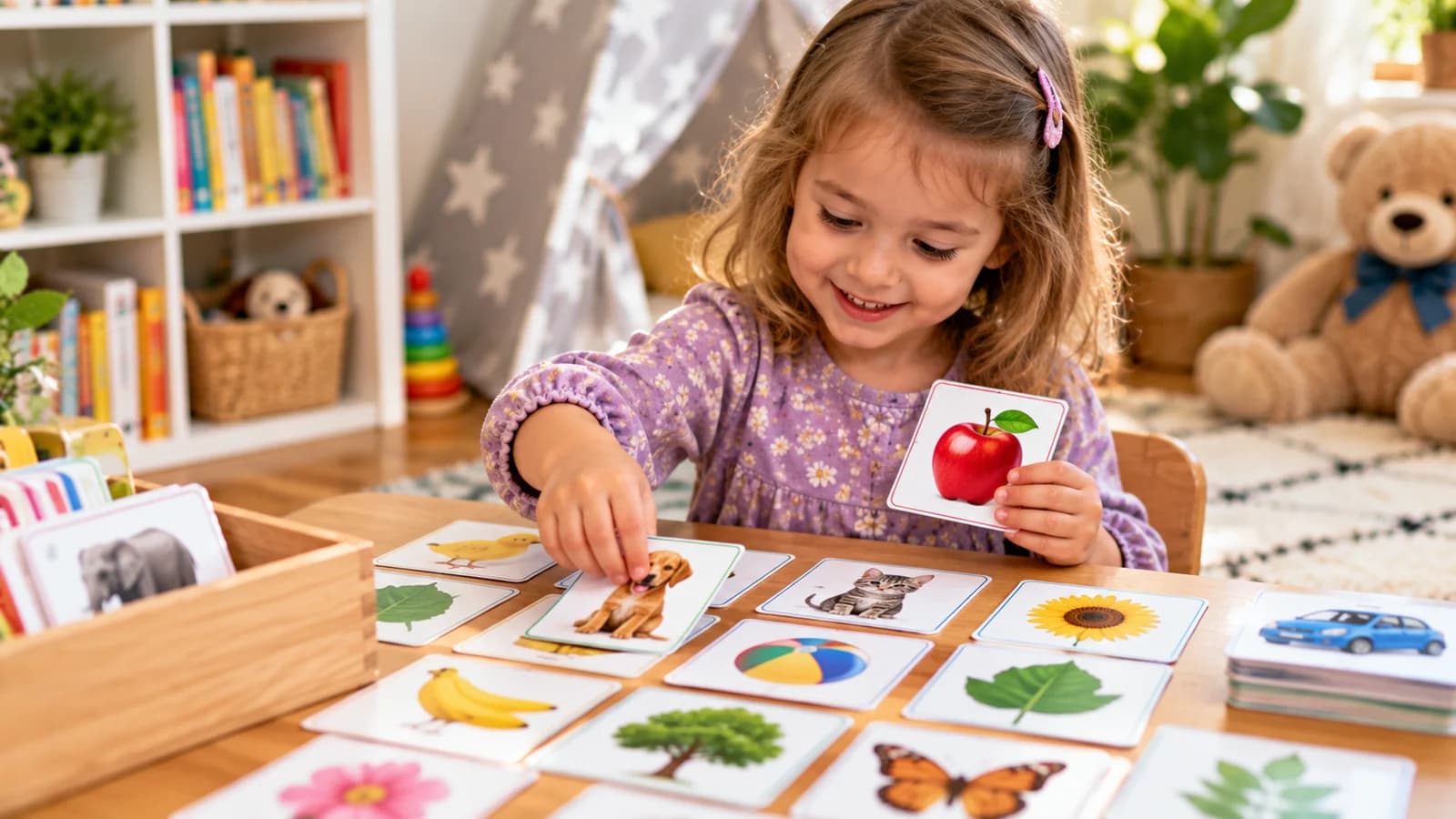
A picture of a dog, a red apple, or a yellow school bus can lead to much more than naming one object. Pictures give young children something familiar to look at while they practice describing, comparing, remembering, and using words in conversation.
You can use picture books, homemade cards, or clear illustrations of everyday objects. There is no need to purchase an expensive set of flashcards.
The most enjoyable picture vocabulary games feel like shared play rather than a spelling test or a lesson with right and wrong answers.
What you will need
- Six to ten clear pictures of familiar animals, foods, toys, or everyday objects.
- Large paper cards or a picture book.
- A clean table or comfortable floor space.
- Optional: Paper and washable crayons for drawing new pictures.
Begin with pictures your child already recognizes. Choose large, clear images without distracting backgrounds or tiny details.
Game 1: Name it and describe it
Choose one picture and invite your child to tell you what they see. If they say 'apple,' respond with a little more detail, such as 'Yes, a shiny red apple.'
You can gradually introduce descriptive words without asking your child to repeat a long sentence.
- 'What can you see in this picture?'
- 'What color is it?'
- 'Is it big or small?'
- 'Where might we find it?'
- 'What can we do with it?'
Allow children to answer with words, gestures, or pointing. Build on what they communicate instead of correcting every response.
Game 2: Find the picture from a clue
Place three familiar picture cards face up. Describe one picture without saying its name and invite your child to find it.
For example, you might say, 'I am thinking of an animal with a long trunk.' Your child can point to the elephant picture.
When the game becomes familiar, switch roles and let your child give the clues.
Game 3: Sort pictures into categories
Picture sorting helps children notice how objects are related. Start with two simple categories, such as animals and foods.
Place a few picture cards on the table and invite your child to group them. Ask what makes the pictures in each group similar.
- Animals and foods.
- Things we wear and things we eat.
- Things that move and things that stay in one place.
- Objects used indoors and outdoors.
Some pictures may fit more than one category. Encourage your child to explain their thinking rather than insisting on only one possible grouping.
Game 4: What is missing?
This simple memory game combines picture recognition with attention and vocabulary.
Place three familiar picture cards on the table. Name them together, then ask your child to look away while you remove one card.
Invite your child to identify the missing picture. If remembering the word is difficult, give a helpful clue.
- Show three familiar pictures.
- Name the pictures together.
- Remove one card while your child looks away.
- Ask which picture is missing.
- Reveal the card and play again.
Begin with two cards if three are too challenging. Keep the game lighthearted and avoid treating memory mistakes as failures.
Game 5: Make a silly picture story
Choose two or three pictures that do not usually belong together, such as a rabbit, a backpack, and a banana.
Invite your child to imagine a story that connects them. Perhaps the rabbit packs a banana for a picnic.
Take turns adding ideas. You can ask what happens next, where the characters go, or how they might feel.
The story does not need to be realistic. Imagination gives children another reason to use familiar and new vocabulary.
Game 6: Match pictures with real objects
Choose pictures of safe, familiar objects that your child can find at home. A picture of a spoon might match a real spoon, while a picture of a shoe might match a shoe near the door.
Invite your child to point to or bring the matching object when it is safe and appropriate.
Talk about how the picture and real object are alike. This helps connect vocabulary with everyday experiences.
Help children use new words naturally
A child may recognize a picture before being ready to name it independently. You can model the word during conversation and give them time to become familiar with it.
For example, if your child points to a picture of a butterfly, you might say, 'That's a butterfly. Its wings have beautiful patterns.'
Later, you can return to the same picture and talk about what the butterfly is doing. Repeated exposure through meaningful conversation can support vocabulary learning.
Adapt picture games to different learning levels
For beginners, use two or three familiar pictures and focus on naming or pointing. Children who enjoy longer conversations can describe details, compare categories, or invent stories.
Some children prefer looking at a book instead of handling cards. Others may enjoy drawing their own pictures. Both approaches can become useful vocabulary activities.
Follow your child's interests and allow time for responses.
Try this picture vocabulary activity today
Choose five pictures from a favorite book or a small set of homemade cards. Begin by naming them together.
Next, give one descriptive clue and invite your child to find the matching picture. Finish by choosing two pictures and making up a short story.
You can reuse the same pictures another day with a different game, helping familiar words appear in new and interesting contexts.
Keep the activity conversational and enjoyable. The goal is to encourage communication, curiosity, and playful language practice.
Picture vocabulary games give young children opportunities to name, describe, compare, remember, and use familiar words. With a few clear pictures and playful conversations, families can support early language learning through everyday activities.
Learn Through Play
Try a Related Learning Activity
Continue exploring this topic with a playful activity from LiaFun Learning.
Related Articles
More practical ideas from LiaFun Learning for playful learning at home.
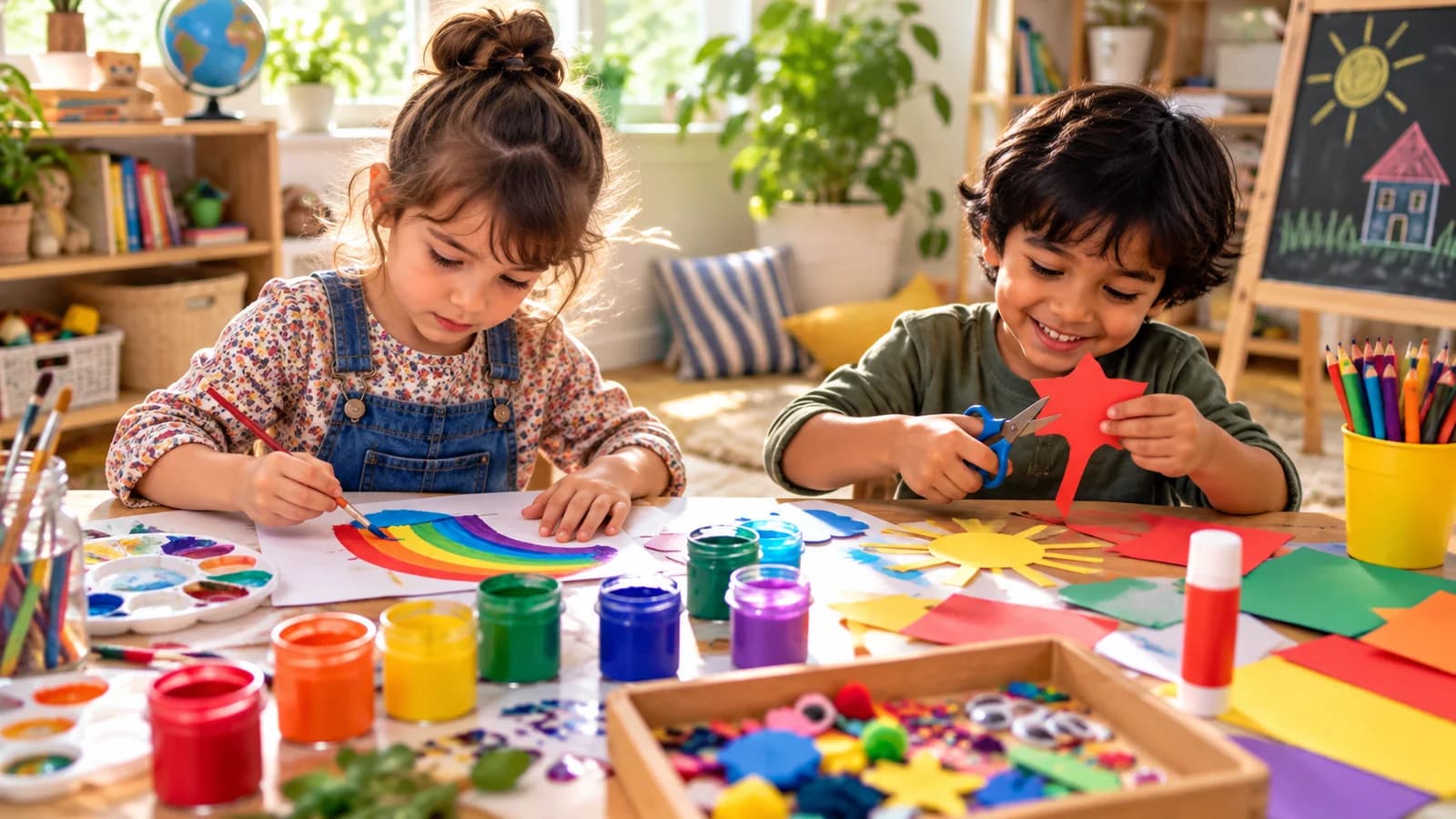
5 Creative Activities for Preschoolers at Home
Explore 5 creative activities for preschoolers, including drawing stories, building a mini city, pretend shopping, colorful patterns and imaginary animals.
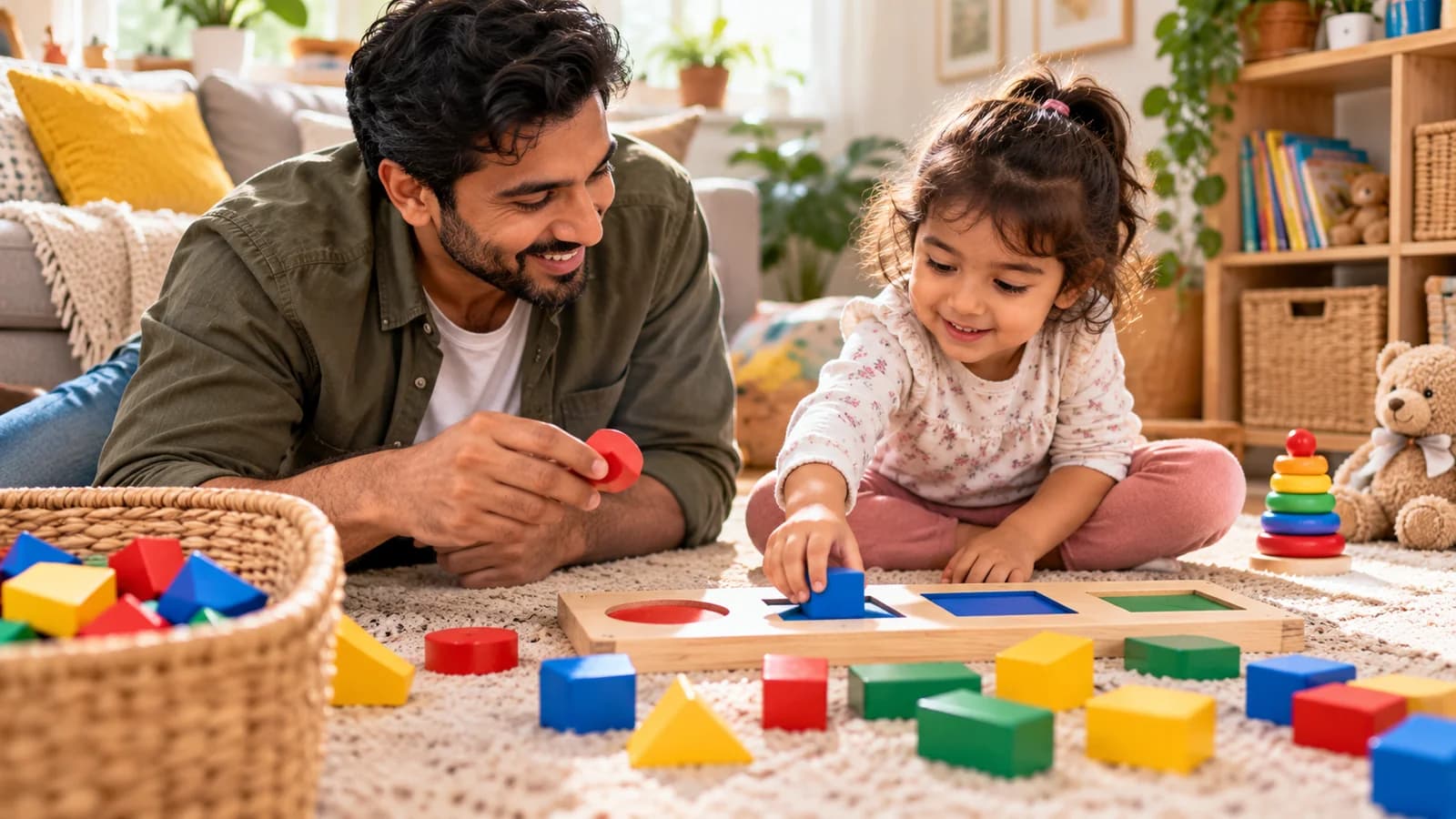
5 Fun Indoor Learning Games for Preschoolers
Discover 5 fun indoor learning games for preschoolers, including color hunts, guessing games, movement patterns, listening activities and shape searches.
A Simple Nature Hunt for Curious Kids
Explore nature with a playful scavenger hunt that encourages children to notice colors, shapes, sounds, and outdoor discoveries.
Keep learning playful
Explore more LiaFun Learning activities designed to make practice simple, visual and enjoyable for young learners.